Core service

Event AV & technical production in Mexico

Sound people can understand, screens they can read, light that works in the room and on camera, and a crew that runs it all to your show flow.

Event AV and technical production is the planning, supply and live operation of the systems an event depends on: audio, video and LED, lighting, cameras, switching, recording and the crew who operate them. First Impact plans these systems from your brief, coordinates them with the venue and other suppliers, and runs them on the day. You keep the creative concept and the run of show.

Also known as: AV production company in Mexico · Event AV rental with technicians · Conference audio, video and lighting

Service
Event AV & Technical Production
Provided by
First Impact, Mexico-based, backed by Castelein AV
Where
Mexico City, Querétaro and elsewhere in Mexico
For
Agencies and producers who have the concept and need the technical production delivered locally; Event planners and DMCs organizing conferences, congresses, galas and incentives in Mexico
Pricing
Scoped per event; no fixed packages
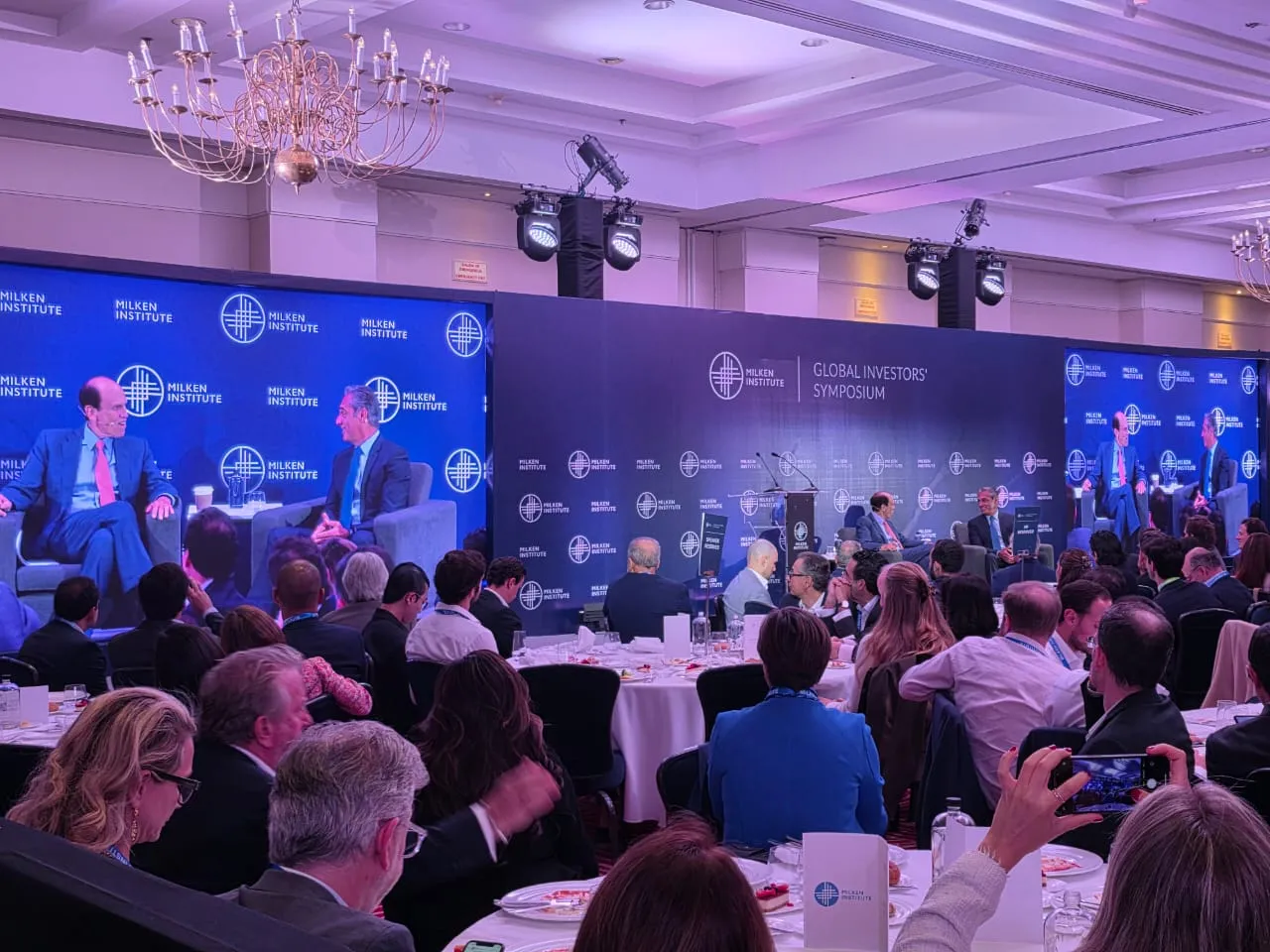
Plenary session of the Milken Institute Global Investors Symposium at the Four Seasons Hotel Mexico City, with LED screens and stage lighting.

Who it is for

  • Agencies and producers who have the concept and need the technical production delivered locally
  • Event planners and DMCs organizing conferences, congresses, galas and incentives in Mexico
  • Corporate event teams running kick-offs, leadership meetings and annual conferences
  • International organizers who need a Mexican production team that works from their technical rider

When it is useful

  • A conference with a plenary room and breakouts that should run as one technical plan
  • A corporate meeting where speeches, panels and video playback must be clear to every seat
  • A launch or gala where LED, lighting and stage cues follow a tight script
  • An event in a hotel or corporate building with limited power, access or rigging options
  • A producer’s technical rider that needs a local team to source, install and operate it

What the scope may include

We plan each system around the job it has to do. A proposal includes only what your event needs; the list below shows what the scope may cover.

Audio and speech clarity

PA coverage, microphones for presenters and panels, mixing, monitoring and playback, planned so every seat hears the speaker clearly. Simultaneous interpretation can be integrated when the event needs it.

Video, displays and LED

LED walls, projection, displays and confidence monitors, sized to viewing distances, ambient light and the content shown.

Lighting

Stage and presenter lighting that works for the room and for cameras, plus scenic lighting where the brief calls for it.

Camera capture

Operated and robotic (PTZ) cameras to put presenters on the room screens, record the event or feed a stream.

Switching and program control

Presentation switching, image processing and video switching, so slides, playback and cameras reach the right screen at the right moment.

Recording

Program and individual camera recordings for later editing or on-demand use, with file formats agreed in advance.

Crew and technical coordination

Engineers, operators and a technical lead who manage set-up, rehearsals, the live show and strike, and act as your point of contact on site.

Ways to work with us

Rental, operated equipment or coordinated production

Not every event needs a full production team. Tell us which of these you are looking for, so the proposal compares like with like.

Equipment rental

You collect or receive equipment and your own technicians install and operate it. Suits teams with in-house crew. Availability and delivery are confirmed per order.

Equipment with technical operation

We supply the equipment plus the technicians to install and operate the agreed systems. Your producer directs the show; our crew runs the systems.

Coordinated technical production

We plan and coordinate the technical scope as a whole: site visit, venue advance, signal flow, crew plan, rehearsals and live operation under one technical lead, working to your producer’s direction.

Creative concept, content, stage design and show direction stay with you or your agency unless we agree otherwise in writing.

What requires separate confirmation

These items depend on the venue, other suppliers or third parties, so we confirm them project by project rather than assume them:

  • Rigging points and suspended loads (they need venue approval and technical checks)
  • Additional power or generators beyond what the venue provides
  • Staging, set construction, scenic elements and printed graphics
  • Simultaneous interpretation booths and interpreters
  • Venue fees, house AV charges, permits and union or labour requirements set by the venue
  • Content creation, motion graphics and post-production editing
  • Travel and accommodation for crew outside the Mexico City area

How planning and delivery work

  1. Brief and technical review

    We read your brief, rider and floor plans and list the questions that affect the technical design.

  2. Site visit and venue advance

    Where the scope includes it, we check access, power, rigging options and sightlines with the venue.

  3. Scope and proposal

    You receive a written scope that separates what is included, what is excluded and what still depends on confirmation.

  4. Planning and documentation

    Signal flow, crew plan, schedule and responsibilities are documented and shared with your producer and the venue.

  5. Rehearsal and live show

    We test microphones, presentations, playback and cues before doors open, then run the systems to your show flow.

  6. Strike and deliverables

    Equipment is removed within the venue’s window, and any agreed recordings are delivered in the agreed format.

What determines the price

There is no fixed price list for production because two events of the same size can need very different systems. The main cost drivers are:

  • Number of rooms and how many run at the same time
  • Audience size, room dimensions and viewing distances
  • Screen size and type (LED, projection or displays)
  • Microphone count, panels and simultaneous interpretation
  • Number of cameras and whether they feed screens, recording or a stream
  • Crew positions and total working hours, including set-up, rehearsal and strike
  • Venue access windows, overnight work and logistics outside Mexico City

Share a budget range in your brief and we will propose a scope that fits it, with the trade-offs of each option.

Relevant case studies

Plenary session of the Milken Institute Global Investors Symposium at the Four Seasons Hotel Mexico City, with LED screens and stage lighting.

Milken Institute · Mexico City

Milken Institute Global Investors Symposium

Five event spaces at the Four Seasons Mexico City run as one technical production, briefed through a UK-based agency.

Briefed by a UK agency for Milken Institute. Technical production by Castelein AV.
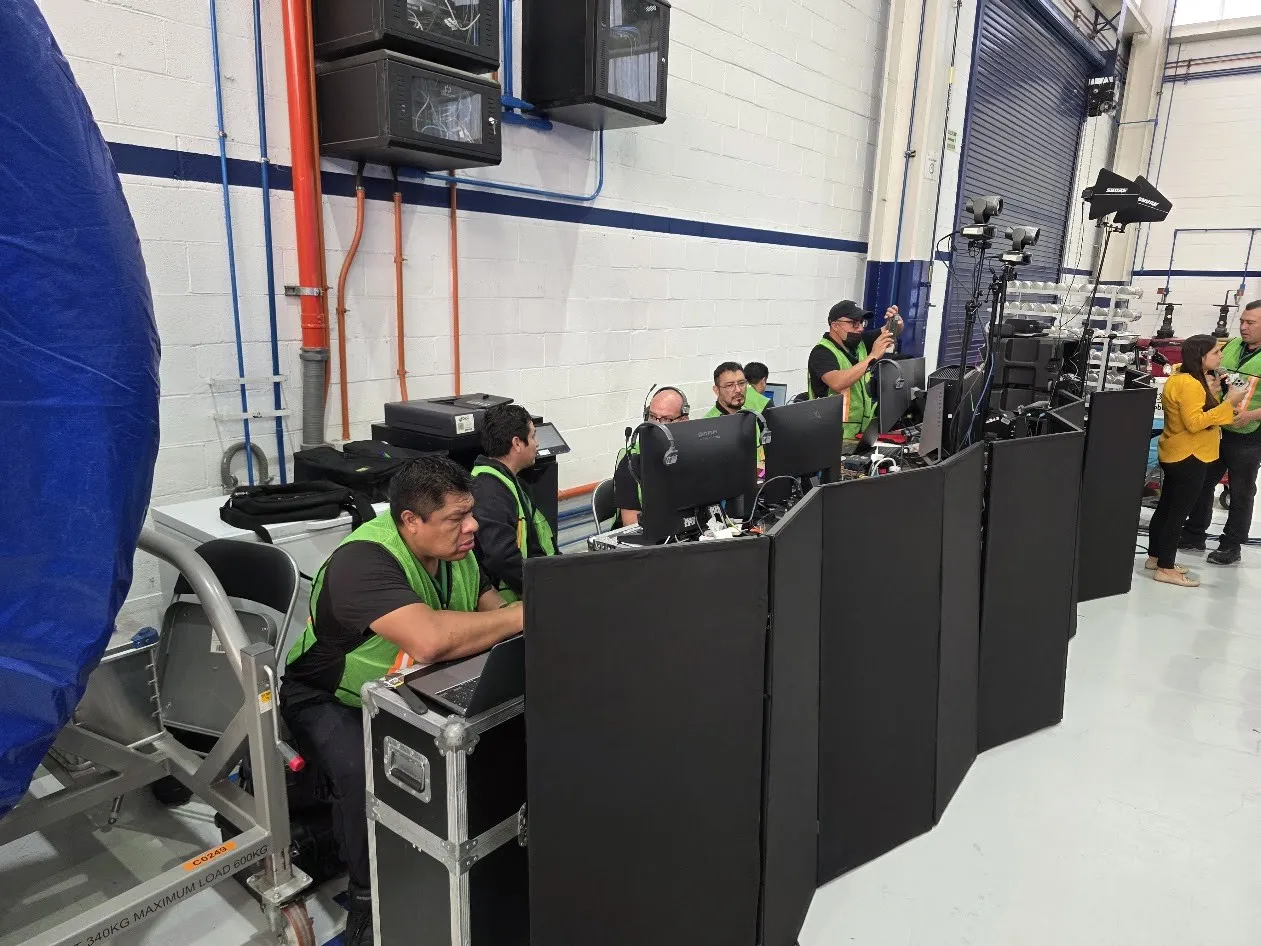
Production control area inside the ITP Aero plant in Querétaro, with crew in safety vests at the monitors.

ITP Aero · Querétaro, Mexico

ITP Aero All Hands 2026

A hybrid All Hands on an aerospace plant floor: 125 people in the room and more than 1,500 colleagues on Teams in four countries.

Turnkey production by Castelein AV for ITP Aero.

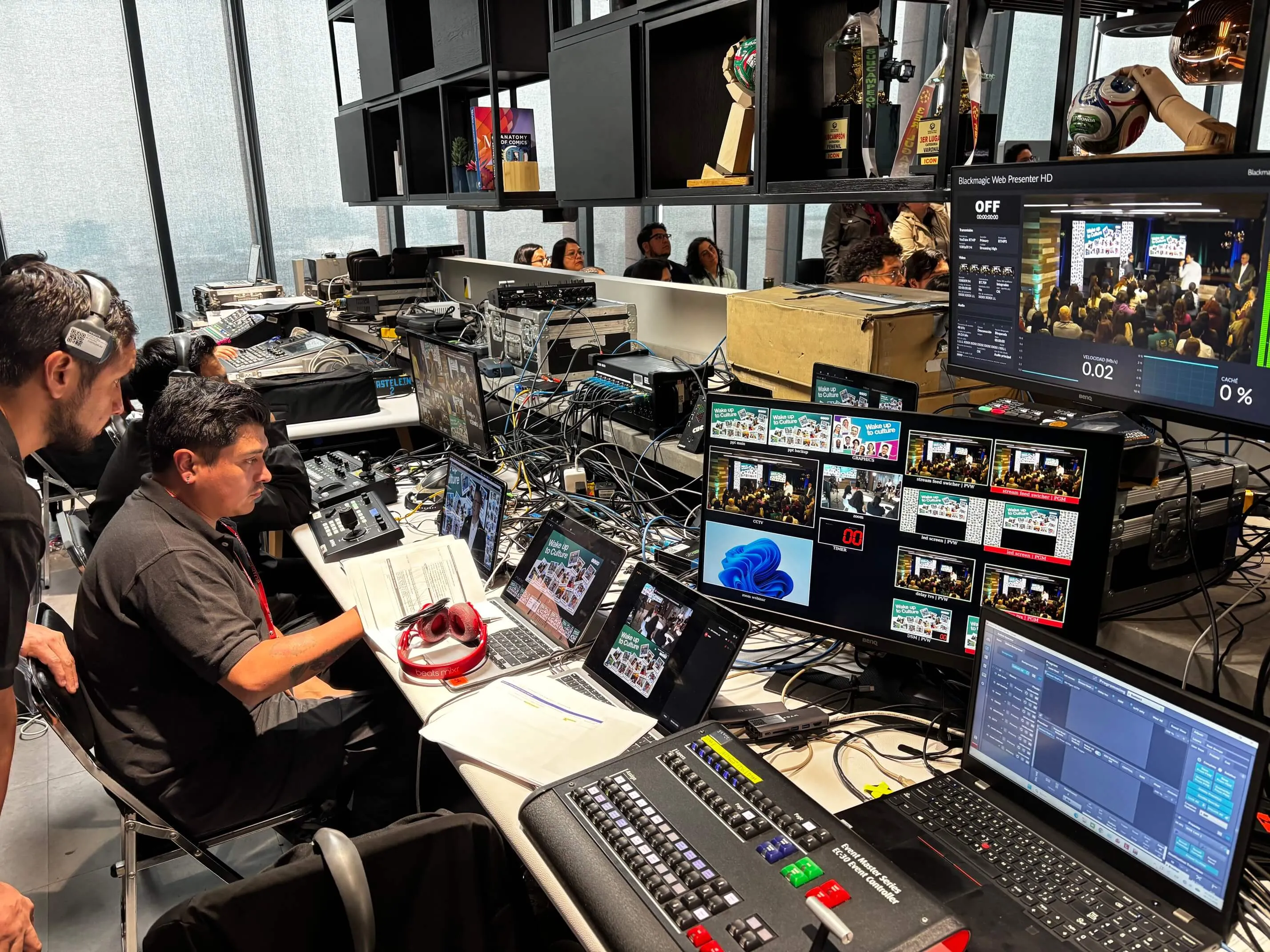
Local control position for the ICON Mexico City hub: video switchers, program monitors and a streaming encoder operated by the crew.

ICON · Mexico City

ICON global hybrid event: the Mexico City hub

An international broadcast producer needed a local team to build and run the Mexico City hub of a global hybrid event around its own workflow.

DV4 directed the global broadcast. Castelein AV built and ran the Mexico City hub.

Frequently asked questions

All questions

What is the difference between equipment rental and full technical production?

Equipment rental supplies the equipment; full technical production supplies the planning, coordination, crew and live operation that make it work.

Between the two sits equipment with technical operation, where we provide the systems and the technicians to run them while your producer directs. Coordinated technical production adds the site visit, venue advance, signal flow, crew plan and rehearsals under one technical lead. Tell us which you need so proposals can be compared fairly.

Also asked as: Should we rent AV equipment or hire a production company? · Do you provide AV technicians as well as equipment?

Should we use an LED wall or projection?

Choose LED for bright rooms, daylight or a stage that needs strong, even colour; projection can work well in a darker room with enough distance between projector and screen.

Other factors are the image size you need, how close the front row sits, rigging and power, set-up time and budget. We compare both options for your specific room rather than recommending one by default.

Also asked as: Should I use LED or projection for a conference? · Is a projector or an LED screen better for a daytime event?

Can you supply an LED video wall with crew in Mexico City?

Yes. An LED wall can be part of the scope in Mexico City and elsewhere in Mexico, delivered with the processing, installation and the technicians who build and run it.

To confirm a configuration we need the venue, the content format, the audience layout and the access times; the size you have in mind is only the starting point. At ITP Aero’s plant in Querétaro, a 7 × 3 m LED wall carried both the program and remote participants.

Also asked as: Where can I rent an LED wall with an operator in Mexico City? · Do you rent LED screens in CDMX?

How large should the LED screen be?

Large enough for the last row to read what will be shown, and no larger than the stage and budget allow. Slides with small text need more size or closer seating than a camera shot or a scenic image.

We work it out from the viewing distance, the proportions of your content, the pixel pitch and the space available. A room plan and a sample presentation make the recommendation much more accurate.

Also asked as: What size LED screen do we need for our room? · How do you calculate screen size for an audience?

Can you handle presentation switching and confidence monitors?

Yes. We route laptops, video playback and cameras to the audience screens, and give presenters confidence monitors at the front of the stage.

Decide early what presenters should see, such as the current slide, the next slide, notes, a countdown or the live program, because each view may need its own output. We test every presentation in rehearsal, ideally on the presenters’ final files.

Also asked as: Can speakers see their slides and a timer on stage? · Who runs the presentations during the event?

What audio system does a conference need?

It depends less on the number of guests than on the room and the program. The goal is speech that is easy to follow from every seat, so we plan speaker placement, microphones, mixing and monitoring around the floor plan and the agenda.

Panels, video playback, remote speakers, interpretation and breakout rooms each add inputs and routing. Send the room layout and agenda and we will size the system to them.

Also asked as: What sound system do we need for 300 people? · How do you make sure everyone can hear the speakers?

Which microphones can you supply?

We supply wired and wireless handheld, headset, lavalier and lectern microphones, chosen by how each presenter speaks and moves.

A panel of six people needs a different set-up from a keynote speaker who walks the stage, and the number of wireless channels running together matters in busy venues. Tell us the program and any speaker preferences; the proposal lists microphone types and quantities.

Also asked as: Do you have wireless microphones? · Can you provide headset microphones for presenters?

Can you run separate audio in several event areas?

Yes. A main hall, breakout rooms, a foyer or an overflow space can each have their own microphones and mix, or receive the main program, depending on what happens there.

We plan it from the floor plan and the timetable of simultaneous sessions, including cabling routes and who operates each area. At the Milken Institute Global Investors Symposium, audio covered the plenary, two breakouts and secondary areas under one plan.

Also asked as: Can you provide sound for the foyer and breakout rooms too? · Can different rooms have different audio?

Do you provide event lighting?

Yes. Lighting can cover presenters, the stage and the room, plus scenic or moving lights when the brief calls for them.

When an event is filmed or streamed, presenter lighting has to suit the cameras and must not wash out the screens, so we plan lighting, screens and camera positions together. Send the stage layout, the creative direction and any venue restrictions.

Also asked as: Do you provide stage lighting for corporate events? · Do we need special lighting if the event is filmed?

What happens if the venue has limited space, power or rigging capacity?

We design within the limits rather than around them. That can mean a different screen format, ground-supported instead of flown equipment, a smaller footprint, or a generator when the venue’s supply is not enough and the venue allows one.

We confirm power and hanging points with the venue before anything is promised. For the Milken Institute symposium, dedicated generators and an event network kept critical systems independent of the hotel’s supply.

Also asked as: Our venue has low ceilings. Can we still have an LED wall? · What if the venue doesn’t have enough power?

Send us your brief

Tell us what you’re planning.

Share what you know so far: dates, city, venue, audience and what the production has to do. Unknowns are fine. We reply with questions or a scope-based proposal.