Core service

Hybrid events & multi-site production

One program, two audiences: the people in the room and everyone watching remotely. We plan both together, so neither feels like an afterthought.

A hybrid event runs one program for two audiences: the people in the room and those joining from elsewhere, whether as remote speakers, online viewers or other locations. Multi-site production connects several rooms, floors, offices or cities into one coordinated show. The work is in the audio routing, the return feeds, the timing and the communication between teams, more than in the stream itself.

Also known as: Hybrid conference production · Remote speaker integration · Multi-location corporate broadcast

Service
Hybrid Events & Multi-Site Production
Provided by
First Impact, Mexico-based, backed by Castelein AV
Where
Mexico City, Querétaro and elsewhere in Mexico
For
Corporate teams connecting offices, plants or countries for all-hands meetings; International producers who need a Mexico hub inside a global broadcast
Pricing
Scoped per event; no fixed packages
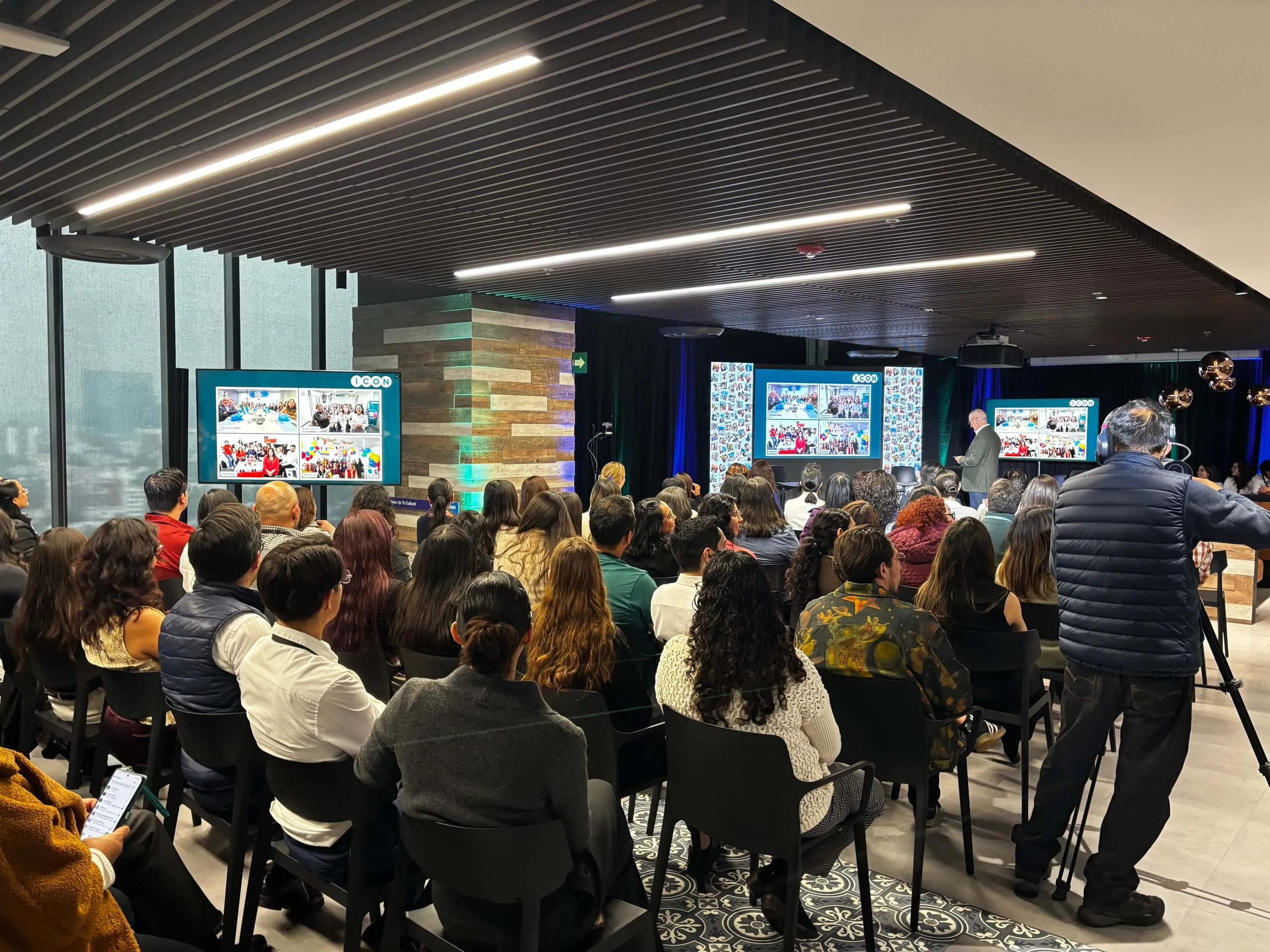
ICON colleagues in the Mexico City cafeteria watching the global program on room displays while a camera operator covers the presenter.

Who it is for

  • Corporate teams connecting offices, plants or countries for all-hands meetings
  • International producers who need a Mexico hub inside a global broadcast
  • Conference organizers with remote keynotes or panelists
  • Agencies running events with a live audience and an online audience at the same time

When it is useful

  • A global event where Mexico City is one of several hubs feeding a central studio
  • A town hall on a plant floor, with most employees watching remotely
  • A panel mixing speakers in the room with guests joining by video
  • Two or more rooms in one building that need to share a program
  • A program where the room screen switches between the local show and the global feed

What the scope may include

Hybrid and multi-site work adds interfaces. The scope may cover:

Remote speaker integration

Bringing remote guests into the room and the program with clean audio both ways, without echo or feedback (mix-minus returns).

Platform integration

Zoom, Teams or another platform connected as a production source, set up with the account owner and tested in advance.

Multi-room and multi-site signal flow

Connections between rooms, floors or locations, with clear rules on which feed goes where and when.

Display switching for the room

Room screens that show the local program, the global feed or a remote speaker at the right moment.

Audio routing and delay control

Local presenters, remote contributors and the program mix kept in sync and intelligible.

Communication lines

Intercom and a local lead who relays the remote director’s calls to the on-site crew.

Recording

Main and backup recordings of the local program, independent of the remote platform.

What requires separate confirmation

Confirmed per project, because they depend on other teams and platforms:

  • The global architecture and direction when another producer owns the broadcast
  • Platform accounts, licences, meeting settings and host permissions
  • Network access in corporate buildings (IT approval, firewall rules, dedicated VLANs)
  • Dedicated network support for workflows such as NDI
  • Equipment and crew at locations outside our scope
  • Interpretation for multilingual sessions

How planning and delivery work

  1. Brief and workflow review

    We map who directs, which platform hosts the program and what each location sends and receives.

  2. Technical design

    Signal flow, audio routing, return feeds and communication lines are documented.

  3. Scope and responsibilities

    The proposal defines handover points between our team, your producer and other locations.

  4. Simulation and rehearsal

    Where the risk justifies it, we test the workflow before show day, then rehearse with the remote director and speakers.

  5. Live delivery

    A local lead keeps the on-site crew aligned with the remote director in real time.

  6. Agreed deliverables

    Local recordings and agreed files are handed over after the event.

What determines the price

Hybrid and multi-site budgets depend mainly on the number of interfaces:

  • Number of rooms, floors or locations and what each one sends and receives
  • Number of remote speakers and how they join
  • Platform and whether we connect into another producer’s workflow
  • Camera and display requirements per space
  • Network conditions and IT requirements in the building
  • Testing, simulation and rehearsal time

Share a budget range in your brief and we will propose a scope that fits it, with the trade-offs of each option.

Relevant case studies

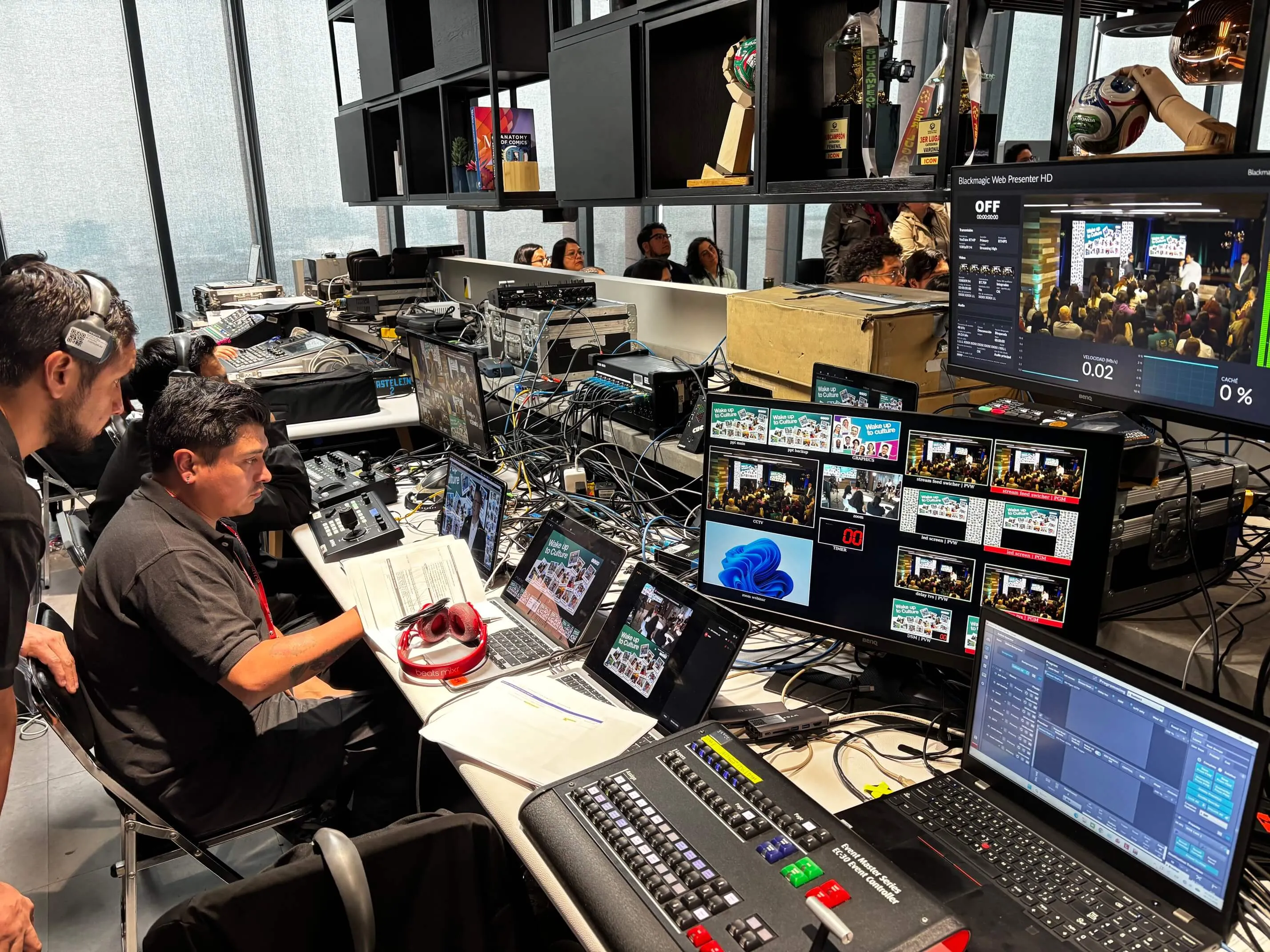
Local control position for the ICON Mexico City hub: video switchers, program monitors and a streaming encoder operated by the crew.

ICON · Mexico City

ICON global hybrid event: the Mexico City hub

An international broadcast producer needed a local team to build and run the Mexico City hub of a global hybrid event around its own workflow.

DV4 directed the global broadcast. Castelein AV built and ran the Mexico City hub.
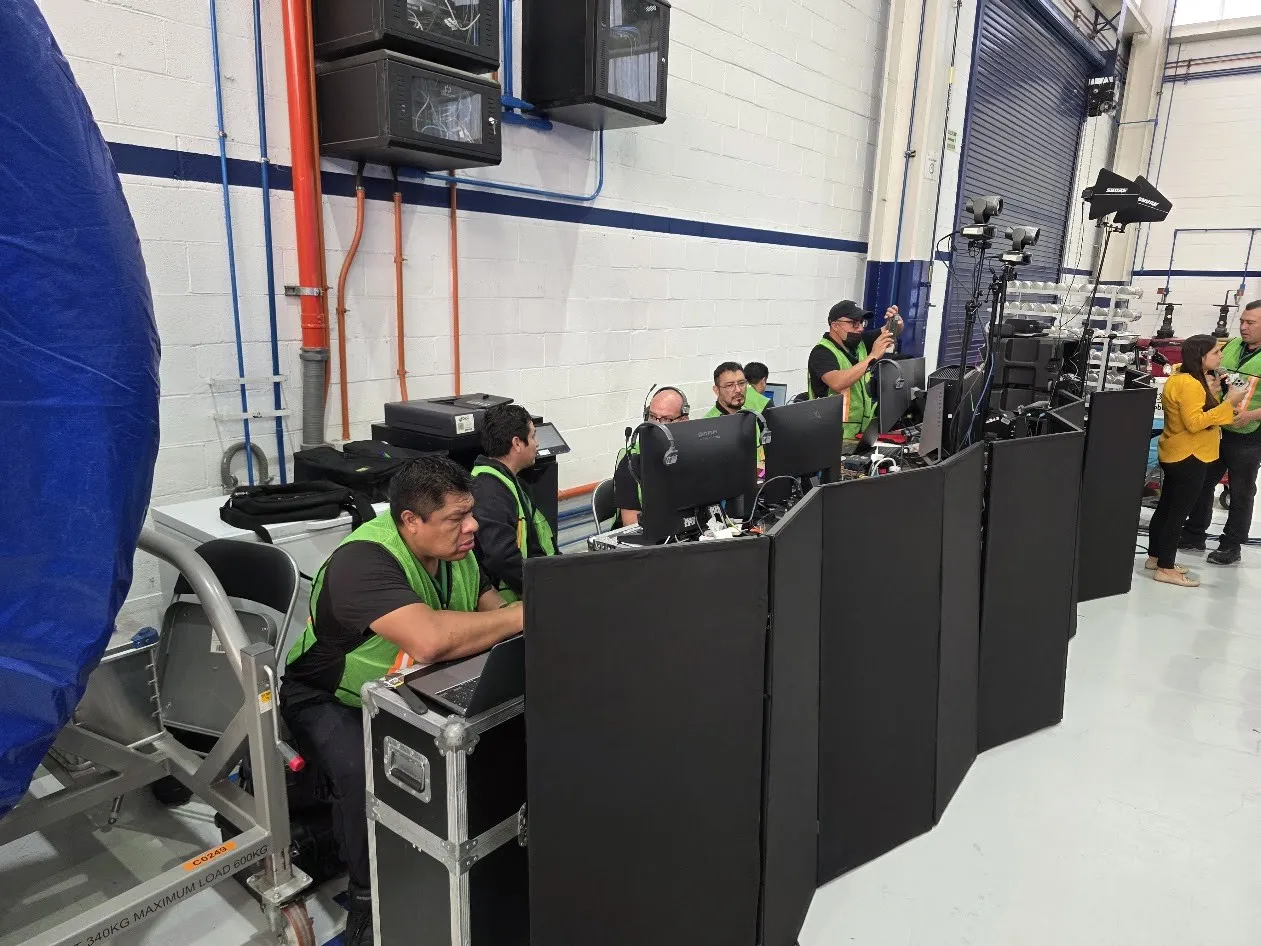
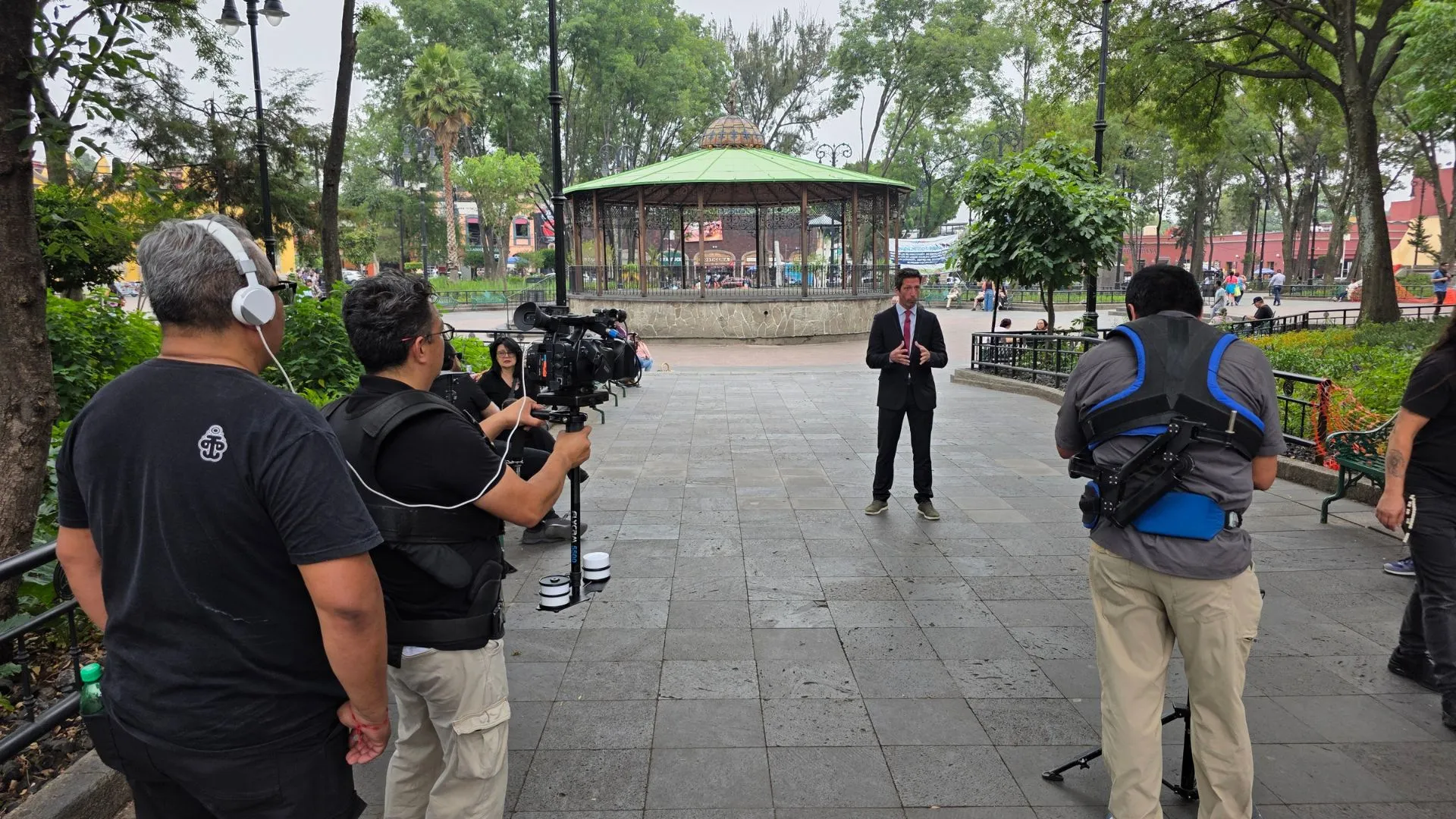
Production control area inside the ITP Aero plant in Querétaro, with crew in safety vests at the monitors.

ITP Aero · Querétaro, Mexico

ITP Aero All Hands 2026

A hybrid All Hands on an aerospace plant floor: 125 people in the room and more than 1,500 colleagues on Teams in four countries.

Turnkey production by Castelein AV for ITP Aero.

Frequently asked questions

All questions

What is a hybrid event?

A hybrid event is one program with two kinds of audience: people in the room and people taking part from elsewhere, as remote speakers, online viewers or other locations.

The technical challenge is making both sides work at once. People in the room must see and hear remote contributors clearly, and remote viewers must receive a clean, directed program rather than a view of the room.

Also asked as: What does hybrid event mean? · How does a hybrid conference work?

Can remote speakers participate?

Yes. We bring remote speakers into the room and the program through Zoom, Teams or a similar platform, with return audio so they can hear the room and follow cues.

Results depend on the speaker’s connection, camera, microphone and lighting, so we recommend a technical check with each remote speaker before the event and keep a fallback for their content, such as a pre-recorded version, when the moment is critical.

Also asked as: Can you support remote presenters at a corporate event? · Can a speaker join our conference by video?

Can remote participants interact with people in the room?

Yes, if interaction is designed in and the platform allows it. Remote people need to hear the room clearly and be heard without echo, which takes audience microphones, a clean audio return and someone moderating.

A one-way broadcast with typed questions is simpler than a panel where remote and in-room guests talk to each other. Tell us which format you want; it changes the audio routing, the screens and the rehearsal plan.

Also asked as: Can online attendees ask questions live? · Can people in the room talk with remote panelists?

Do you work with Zoom and Microsoft Teams?

Yes. Zoom and Teams can bring remote speakers into the room, carry the program to remote employees, or both. We connect them as production sources rather than leaving a laptop pointed at the stage.

Meeting settings, host rights and audio routing need testing with the account owner, because two meetings on the same platform can behave differently. ITP Aero’s All Hands ran on Teams; ICON’s Mexico hub connected into DV4’s Zoom studio.

Also asked as: Can you put Teams participants on the big screen? · Can a Zoom speaker present at our live event?

Can you connect multiple locations?

Yes. We connect rooms, floors, offices or cities into one program, either by producing each location or by building the local hub inside a wider workflow.

Multi-site work depends on clear rules: which location sends what, who directs, how timing is handled and how teams talk to each other during the show.

Also asked as: Can you connect several offices in one live broadcast? · Can two venues share one program?

Can you integrate with an international broadcast team?

Yes. We act as the local production team inside another producer’s broadcast: they design the architecture and direct the program; we build and run the local hub around their workflow.

For ICON’s global hybrid event, the Irish broadcast producer DV4 designed the global system and directed through its Zoom studio. Castelein AV, the team behind First Impact, built and operated the Mexico City hub and connected it into DV4’s setup.

Also asked as: Can you be the Mexico hub of our global broadcast? · Do you work as a local crew for overseas broadcasters?

What happens if connectivity fails?

What happens depends on the protections agreed for your event. With a backup connection or a bonded/cellular link, the stream can switch over; without one, the stream may drop while the local program and recording continue.

We agree the protections and the response plan in advance, including who informs the audience and what the room sees, so the team knows what to do if it happens. No connection can be guaranteed, and the proposal states what is and is not covered.

Also asked as: What if the internet goes down during our livestream? · Do you have a backup connection for streaming?

Can you prepare a signal-flow diagram?

Yes, when technical documentation is part of the agreed scope. A signal-flow diagram shows how microphones, cameras, laptops, playback, switchers, screens, recorders and the stream connect, and in which format each signal travels.

It is most useful when several suppliers or a remote production team share the show, because it makes every handover point visible before installation. For ICON’s Mexico City hub, the local connection schematics were designed around DV4’s global workflow.

Also asked as: Can you document the AV system for our technical team? · Do you provide technical drawings for events?

Send us your brief

Tell us what you’re planning.

Share what you know so far: dates, city, venue, audience and what the production has to do. Unknowns are fine. We reply with questions or a scope-based proposal.