
Local Production Support for Agencies and International Producers
Your technical team on the ground in Mexico: venue advance, equipment, crew and live operation, working to your direction and your workflow.
ICON · Global hybrid event, local hub
An international broadcast producer needed a local team to build and run the Mexico City hub of a global hybrid event around its own workflow.
Delivered by Castelein AV, the team behind First Impact. First published on casteleinav.com.
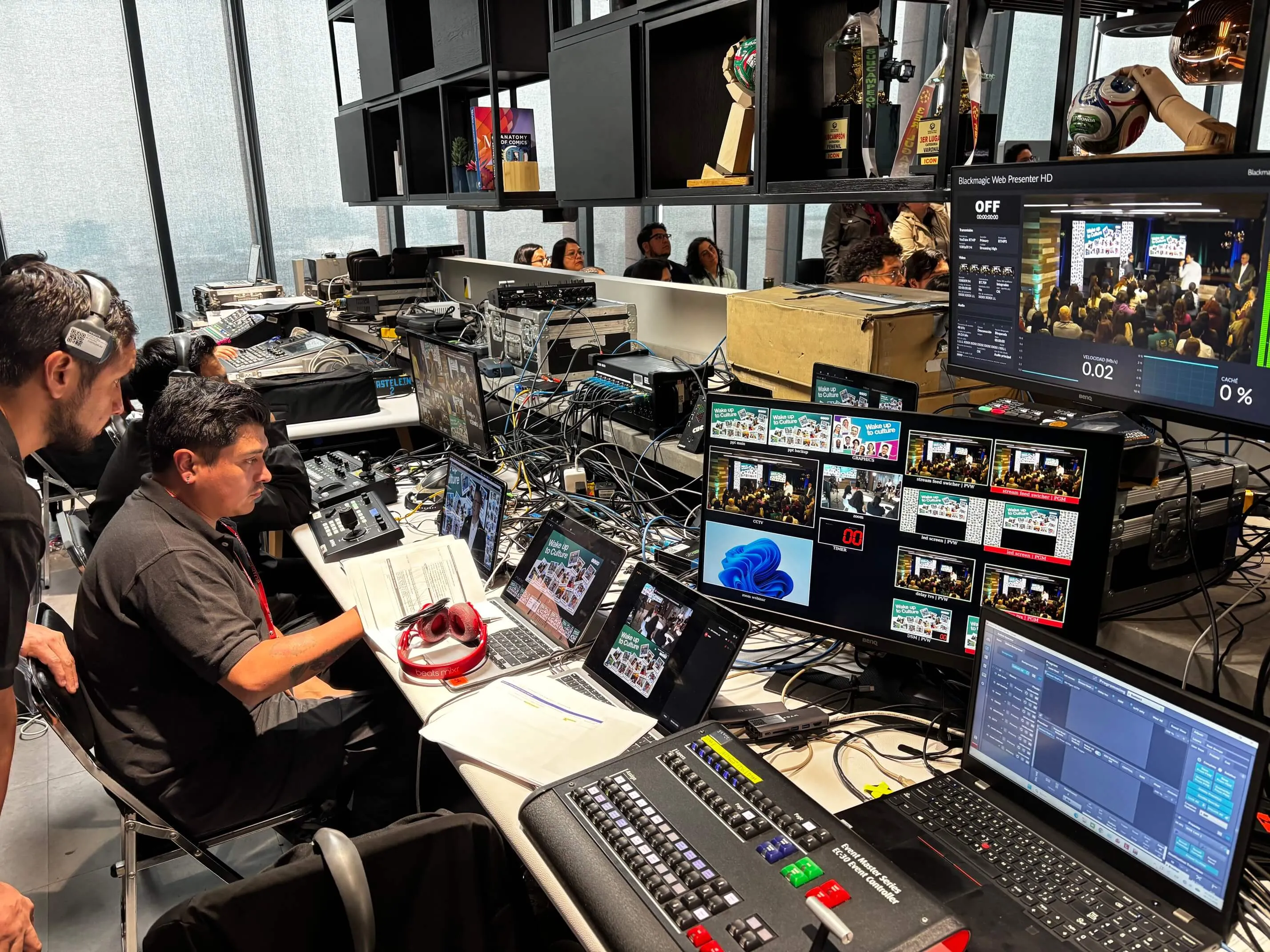
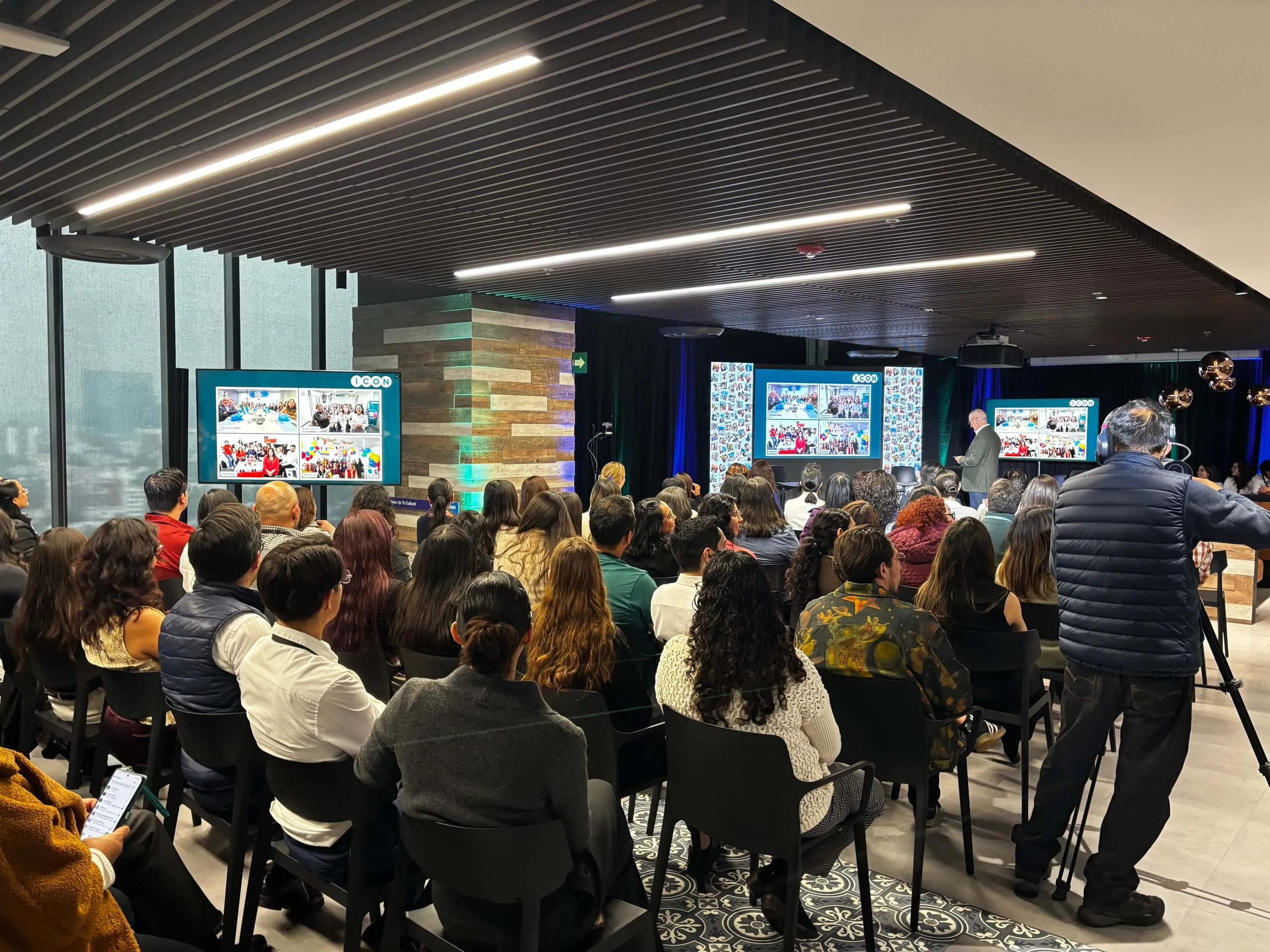
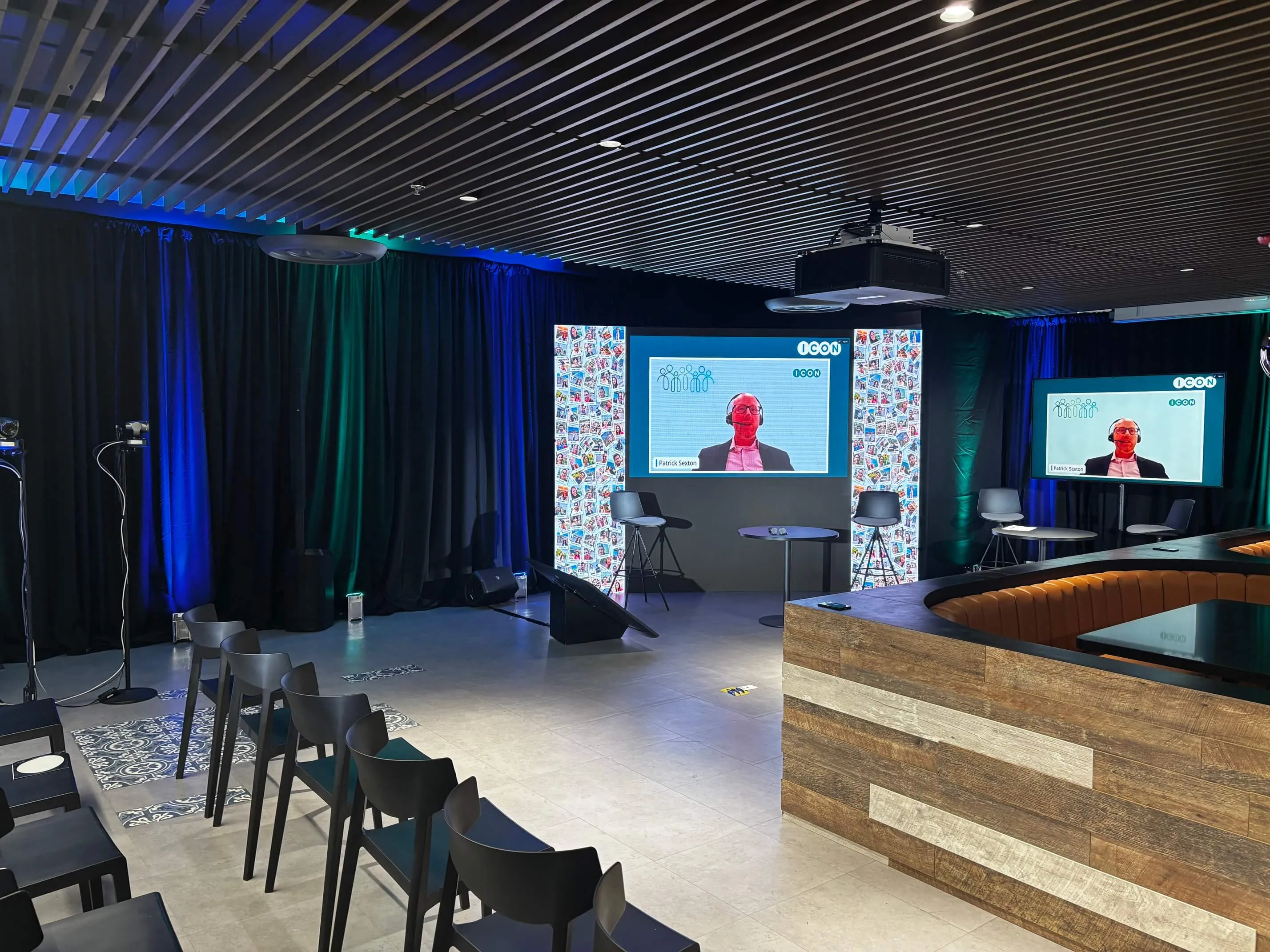
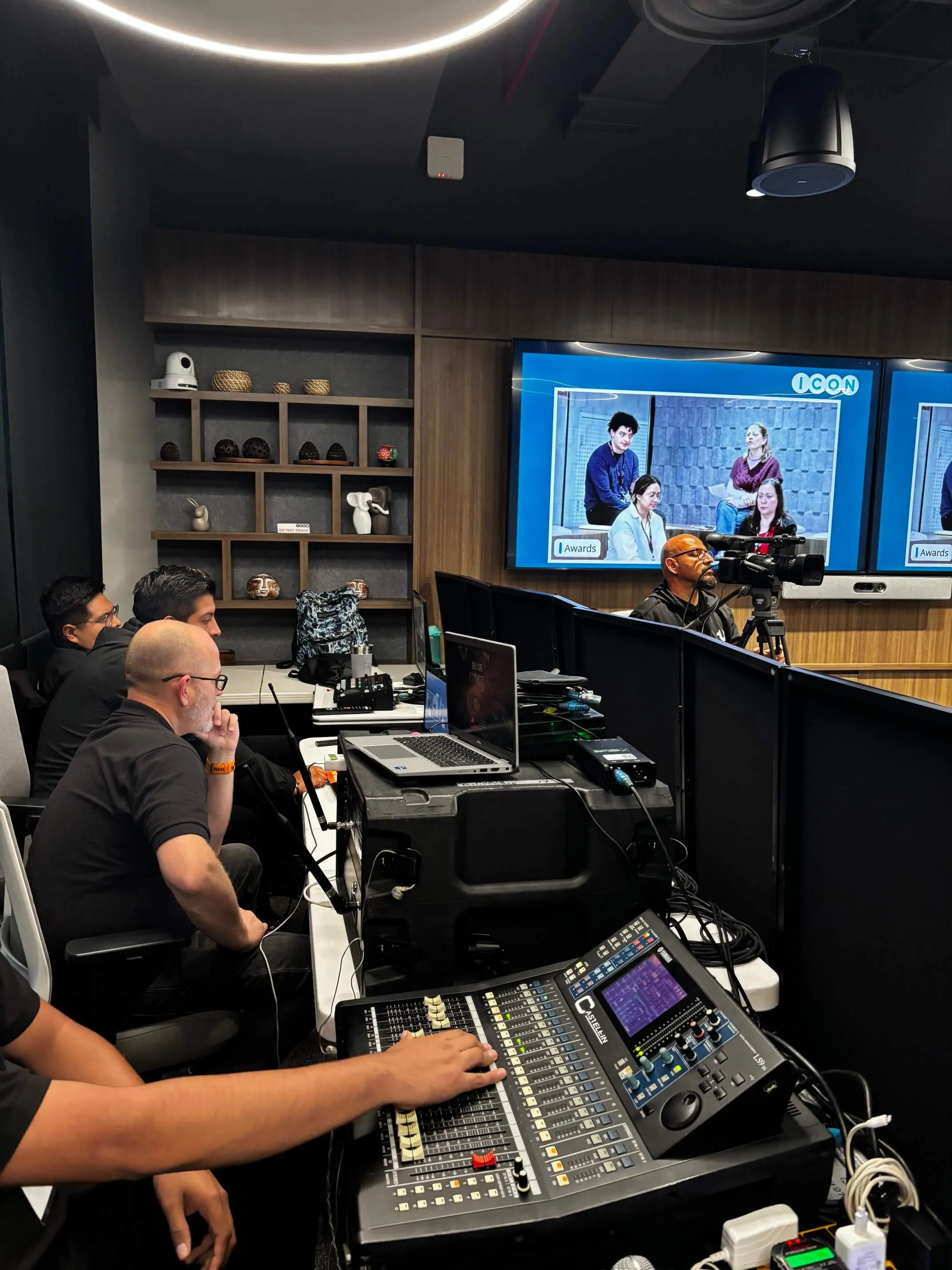
In October 2026, Castelein AV, the team behind First Impact, built and operated the Mexico City hub of ICON’s annual global hybrid event. The Irish broadcast producer DV4 designed the global architecture and directed the show from its Zoom studio; the local team connected two spaces on different floors into that workflow after testing it in a two-room warehouse simulation.
ICON runs an annual global hybrid event that connects its offices into one program. DV4, an Irish broadcast producer, designed the architecture and directed the show through its Zoom studio. For the hub serving the Americas in Mexico City, DV4 needed a local partner to build and run everything on the ground, and selected Castelein AV.
The lesson of the project is simple: we integrated into the producer’s workflow and made the local production work.
An international production team needed coordinated local execution in Mexico, inside a workflow it had already designed.
The hub served two audiences. ICON colleagues in the room needed to see and hear presenters, panels and remote speakers clearly. Everyone watching the global program needed Mexico City to arrive clean: the right camera, the right feed, no echo, no interruption.
The format added complexity: two spaces on different floors, both feeding one global program, and a run of show that kept evolving until the last week.
Before show day the team arranged a two-room warehouse simulation to test DV4’s proposed workflow, so problems could be found away from the client’s building.
DV4 designed the global architecture and directed the broadcast. Castelein AV designed the local connection schematics so the cafeteria and auditorium could connect directly into DV4’s Zoom studio setup.
A dedicated Zoom laptop was built into the local production set-up as the hub’s connection to the studio.
Local switching let the auditorium show the multicamera program for most of the event, then switch cleanly to the Zoom feed during its own contribution.
Mix-minus returns, audio delay control and final audio embedding after the Barco S3 kept communication clear between local and remote participants.
An on-site project manager relayed shots and switching calls from DV4’s director to the local crew in real time.
Only equipment verified in the project documentation, grouped by the job it did.
| Equipment | What it did |
|---|---|
| Bose L1 Pro16 | PA system for the presentation areas |
| DiGiCo SD9 with D-Rack | Digital audio console |
| Allen & Heath CQ-18T | Second digital audio console |
| JBL PRX812 | Stage monitor |
| JBL EON ONE | Compact line array |
| Shure QLX (handheld, headset, lavalier) | Wireless microphones for presenters, panels and interviews |
| Audio interfaces | Remote audio connections to the Zoom studio |
| Equipment | What it did |
|---|---|
| Panasonic AG-HPX255 P2 HD | Operated broadcast camera |
| AViPAS AV-1280G + AV-3104IP controller | PTZ cameras and their controller |
| ATEM Television Studio Pro HD + Pro 4K | Video switchers for the local program |
| Roland V-60HD, ATEM Mini Pro | Additional video switching |
| Barco S3 with EC-30 | Screen management: switching what each display shows; final audio embedding happened after this stage |
| MacBook Pro with Millumin | Media server for playback |
| Unilumin Upad III LED, 3.5 × 2 m, 2.6 mm, Novastar | Focused LED backdrop for a presentation area |
| Samsung 55" | Confidence monitor |
| LG 75" | Program reference display |
| Equipment | What it did |
|---|---|
| Lenovo ThinkPad L15 | Dedicated Zoom computer connecting the hub to DV4’s studio |
| Blackmagic Web Presenter (Brightcove) | Hardware streaming encoder |
| HyperDeck Studio HD Plus × 2 | Main and backup program recording |
| Equipment | What it did |
|---|---|
| Conic / Elation LED Leeko | LED profile fixtures for presenters |
| Chauvet WELL FIT + WELL COM | Wireless uplighting and its wireless control |
| Hedgehog 4 | Lighting console |
| Black pipe-and-drape | Backdrop and masking |
| Equipment | What it did |
|---|---|
| Clear-Com PK-7, wired beltpacks | Intercom between the local lead and crew |
| Tripods, Neewer dolly | Camera support |
Camera positions were revised, and lighting, display and backdrop options were added for each presentation area as the run of show evolved.
A focused LED backdrop, wireless uplighting, black pipe-and-drape and additional technicians delivered the look; an extra 75-inch display was added to the set-up.
A single communication line ran from DV4’s director to the crew through the on-site project manager.
Outcomes as documented in the published case. We do not add figures the project did not record.
Ideas identified for future editions. They were not part of this delivery.
We integrated into the producer’s workflow and made the local production work.
Original source: Castelein AV case study
General answers, with this case as a real example.
Yes. We act as the local production team inside another producer’s broadcast: they design the architecture and direct the program; we build and run the local hub around their workflow.
For ICON’s global hybrid event, the Irish broadcast producer DV4 designed the global system and directed through its Zoom studio. Castelein AV, the team behind First Impact, built and operated the Mexico City hub and connected it into DV4’s setup.
Also asked as: Can you be the Mexico hub of our global broadcast?
· Do you work as a local crew for overseas broadcasters?
Yes. This is one of the main reasons First Impact exists: you bring the production and the creative direction, and we provide the local technical side in Mexico.
That covers equipment, crew, venue coordination, set-up, rehearsals and live operation, aligned with your rider, your signal handovers and your schedule. ICON’s global hybrid event and the Milken Institute symposium, briefed through a UK agency, are examples.
Also asked as: Can you handle the complete AV production for an international event in Mexico?
· I am an international event producer and need a reliable local AV production partner in Mexico.
Production partner in Mexico · Case study: ICON global hybrid event: the Mexico City hub
Yes. We start from your workflow, including your signal flow, platforms, file formats and schedule, and build the local side to match it.
When a workflow is new to the venue or the team, we test it before show day. For ICON’s global hybrid event we built a two-room simulation in a warehouse to test the producer’s proposed workflow before installing it in the client’s building.
Also asked as: Can a local AV company in Mexico work with our US or European production team?
· Will you adapt to the way our team already works?
Case study: ICON global hybrid event: the Mexico City hub · Local Production Support for Agencies and International Producers
Yes, when technical documentation is part of the agreed scope. A signal-flow diagram shows how microphones, cameras, laptops, playback, switchers, screens, recorders and the stream connect, and in which format each signal travels.
It is most useful when several suppliers or a remote production team share the show, because it makes every handover point visible before installation. For ICON’s Mexico City hub, the local connection schematics were designed around DV4’s global workflow.
Also asked as: Can you document the AV system for our technical team?
· Do you provide technical drawings for events?
Case study: ICON global hybrid event: the Mexico City hub · Local Production Support for Agencies and International Producers
Yes. Zoom and Teams can bring remote speakers into the room, carry the program to remote employees, or both. We connect them as production sources rather than leaving a laptop pointed at the stage.
Meeting settings, host rights and audio routing need testing with the account owner, because two meetings on the same platform can behave differently. ITP Aero’s All Hands ran on Teams; ICON’s Mexico hub connected into DV4’s Zoom studio.
Also asked as: Can you put Teams participants on the big screen?
· Can a Zoom speaker present at our live event?
Case study: ITP Aero All Hands 2026 · Case study: ICON global hybrid event: the Mexico City hub
Yes, if interaction is designed in and the platform allows it. Remote people need to hear the room clearly and be heard without echo, which takes audience microphones, a clean audio return and someone moderating.
A one-way broadcast with typed questions is simpler than a panel where remote and in-room guests talk to each other. Tell us which format you want; it changes the audio routing, the screens and the rehearsal plan.
Also asked as: Can online attendees ask questions live?
· Can people in the room talk with remote panelists?
Hybrid Events & Multi-Site Production · Case study: ICON global hybrid event: the Mexico City hub
Site visits and rehearsals are included when they are part of the agreed scope, and the proposal states how many and when.
For most productions we recommend at least one technical rehearsal with the actual presentations and speakers. Complex hybrid workflows may justify additional tests or a simulation before show day.
Also asked as: Do you do a tech rehearsal before the event?
· Is a venue visit part of the quote?
Your technical team on the ground in Mexico: venue advance, equipment, crew and live operation, working to your direction and your workflow.
Remote speakers, Zoom or Teams integration, and several rooms or locations connected into one program that works in the room and online.
Audio, LED and video, lighting, cameras and crew for conferences, corporate events and launches, coordinated with your venue and run to your show flow.
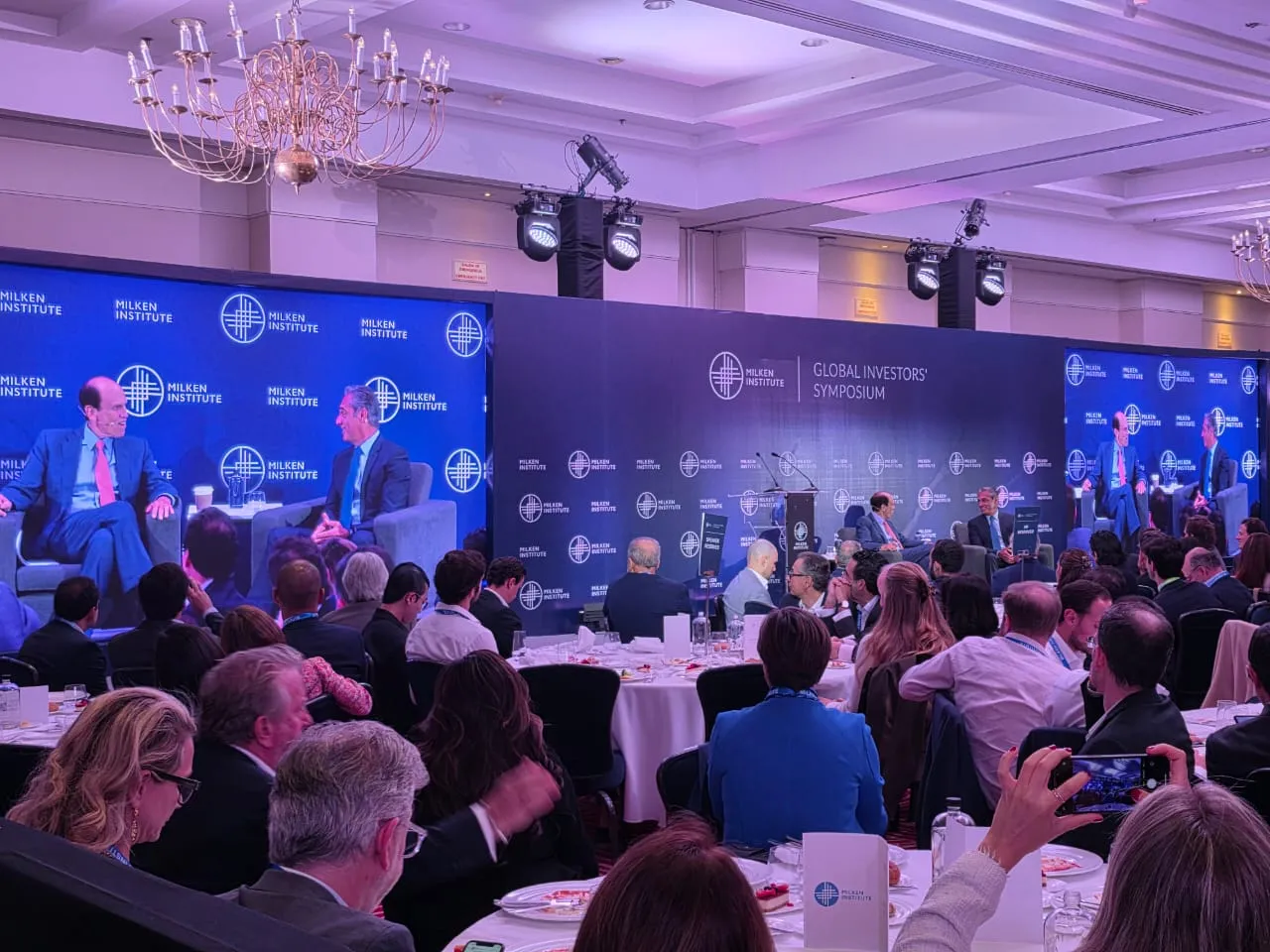
Milken Institute · Mexico City
Five event spaces at the Four Seasons Mexico City run as one technical production, briefed through a UK-based agency.
Briefed by a UK agency for Milken Institute. Technical production by Castelein AV.
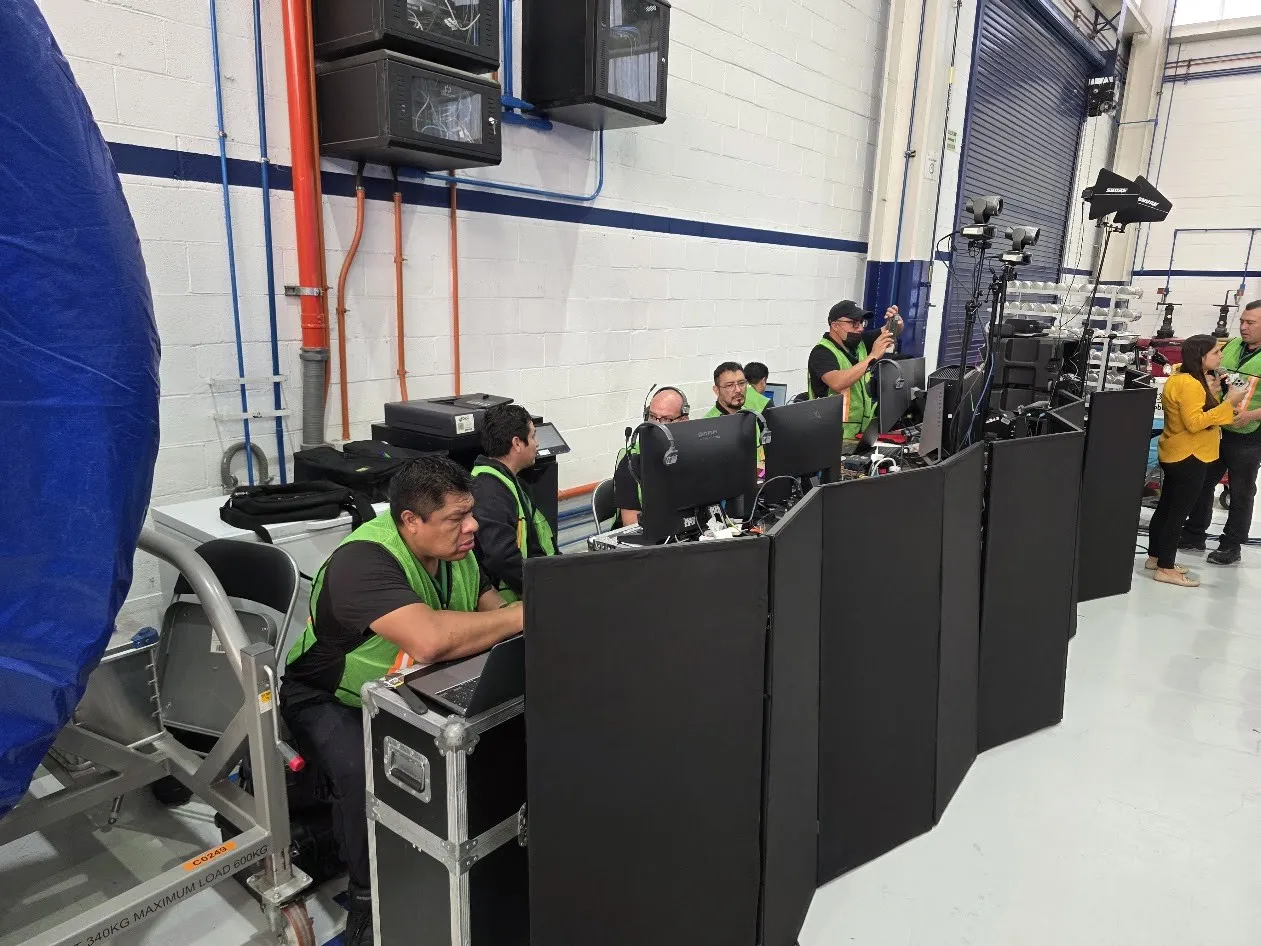
ITP Aero · Querétaro, Mexico
A hybrid All Hands on an aerospace plant floor: 125 people in the room and more than 1,500 colleagues on Teams in four countries.
Turnkey production by Castelein AV for ITP Aero.
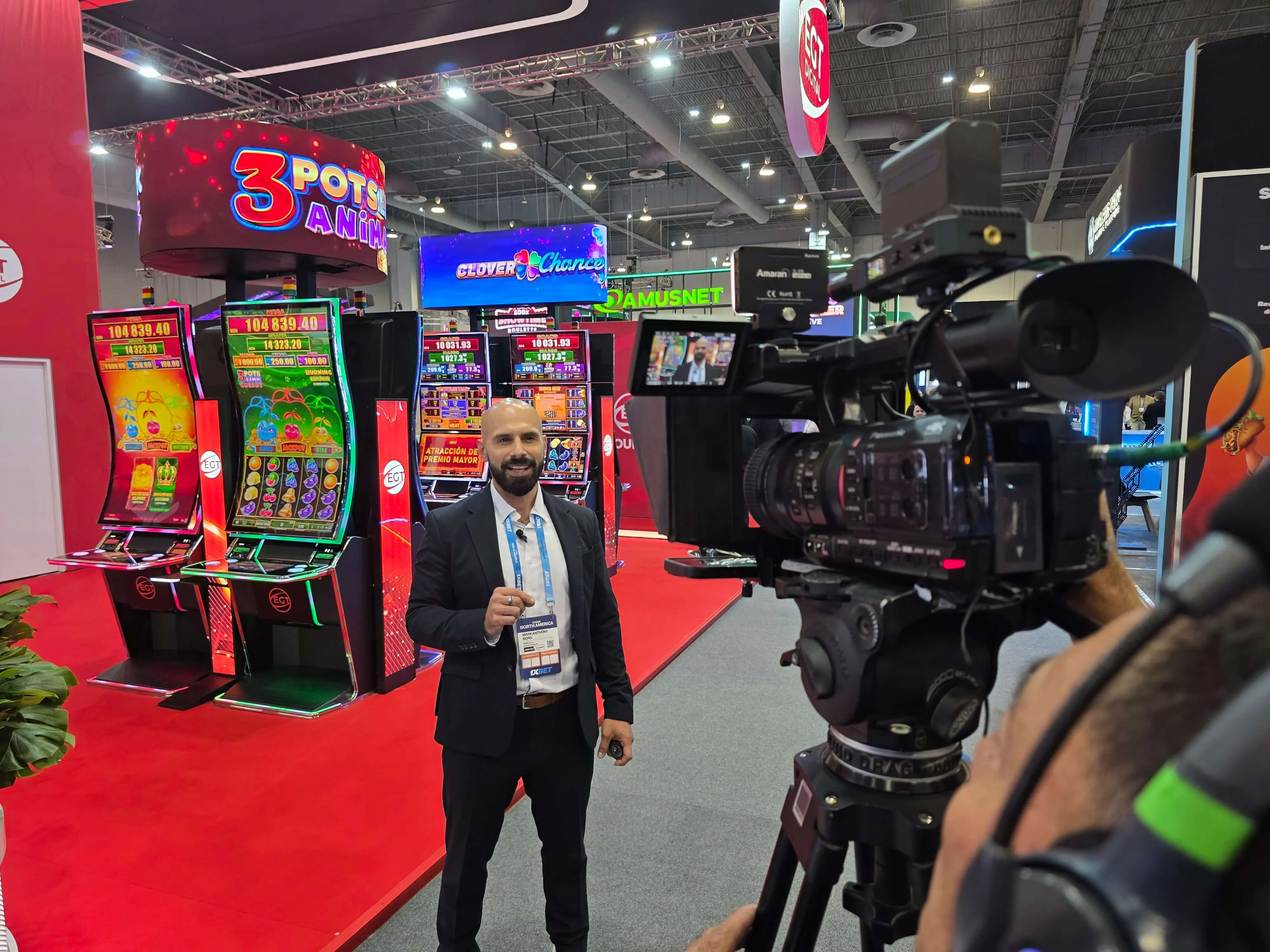
SiGMA · Mexico City
An awards ceremony and two conference days in Mexico City, produced as one video scope feeding room screens and two live streams.
Video production and streaming by First Impact for SiGMA.
Send us your brief
Share what you know so far: dates, city, venue, audience and what the production has to do. Unknowns are fine. We reply with questions or a scope-based proposal.