Live Streaming & Broadcast Production
Multicamera streams, town halls, webinars and executive broadcasts: directed, delivered to your platform and recorded.
SiGMA · International conference and awards ceremony
An awards ceremony and two conference days in Mexico City, produced as one video scope feeding room screens and two live streams.
Delivered by First Impact.
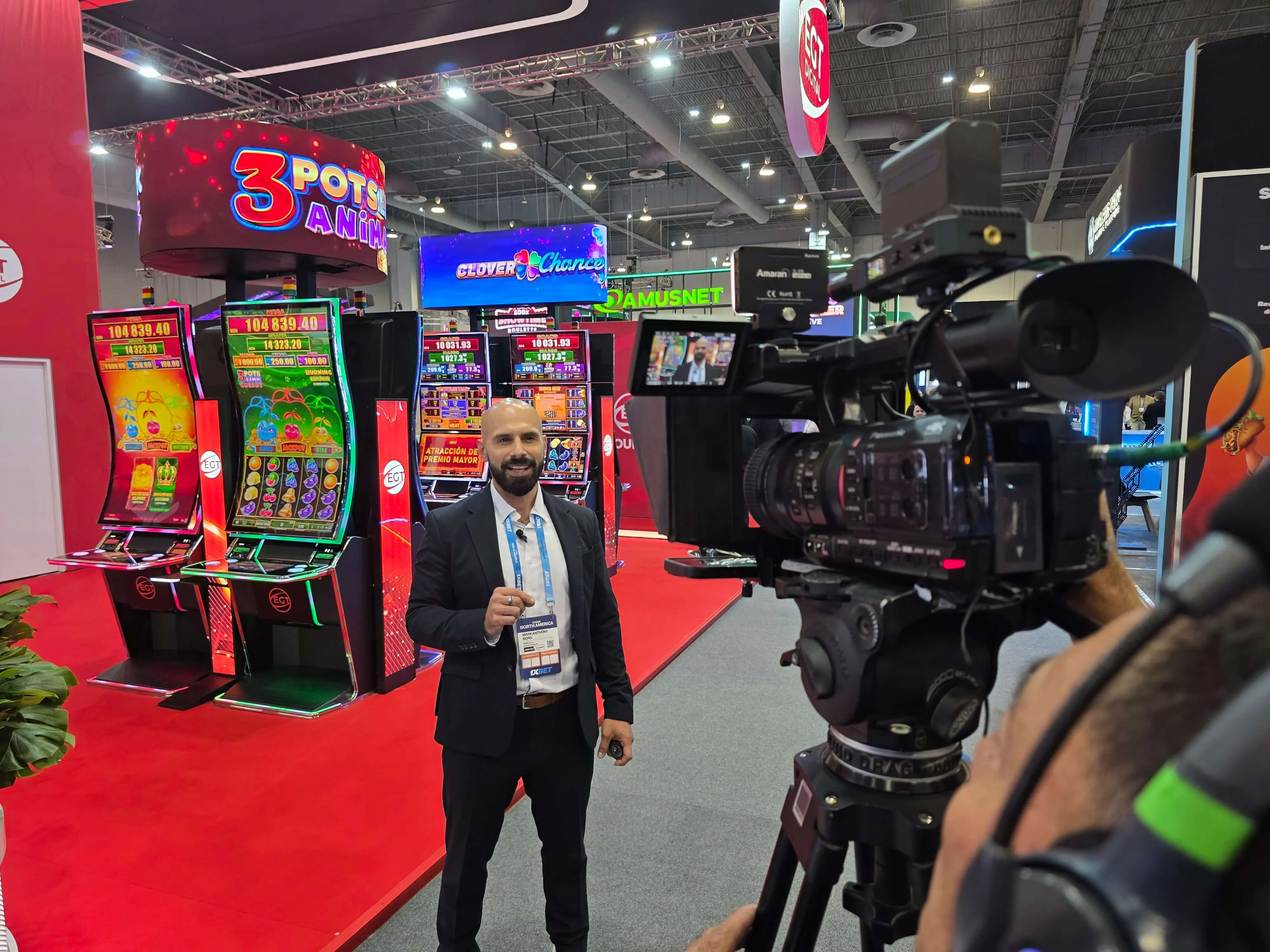
For SiGMA North America 2026 in Mexico City, First Impact produced the video scope of the awards ceremony and two conference days: multicamera direction, two concurrent live streams, local recording of the program and the directed program on screens in the hall.
SiGMA brings its conference circuit to a different region each edition. The Mexico City edition of SiGMA North America 2026 included two rehearsal days, an awards ceremony and two days of conference programming, all inside a single video scope.
One directed program had to drive the room screens and two live streams at the same time: a main program stream and a dedicated interview stream.
The awards ceremony allowed no second take, the conference content had to hold up when replayed, and the budget changed during planning.
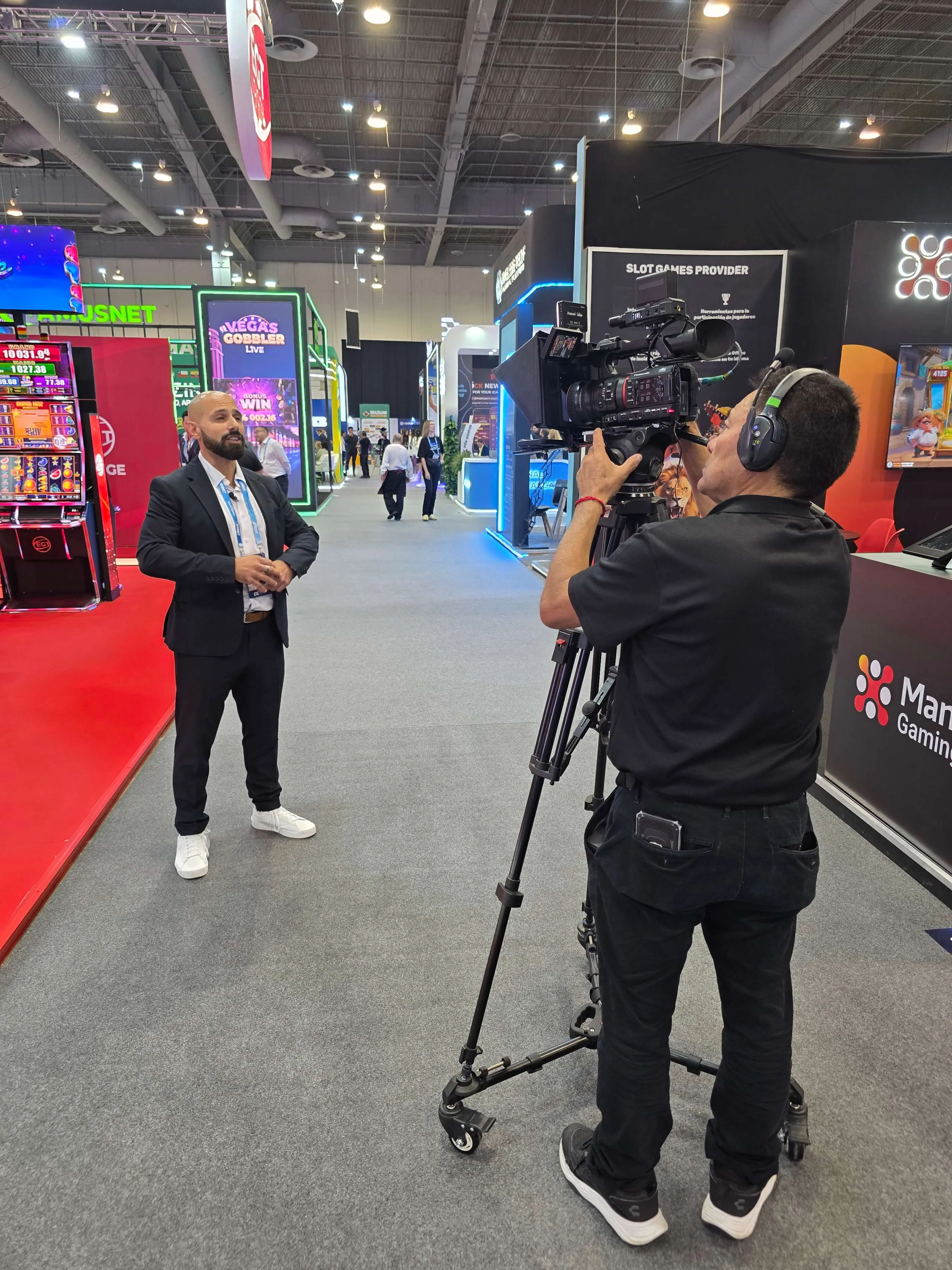
One operated 4K camera plus three PTZ cameras on stage, wide and reverse angles.
A separate camera on a wireless HDMI transmitter kept the interview position mobile without drawing on the main program.
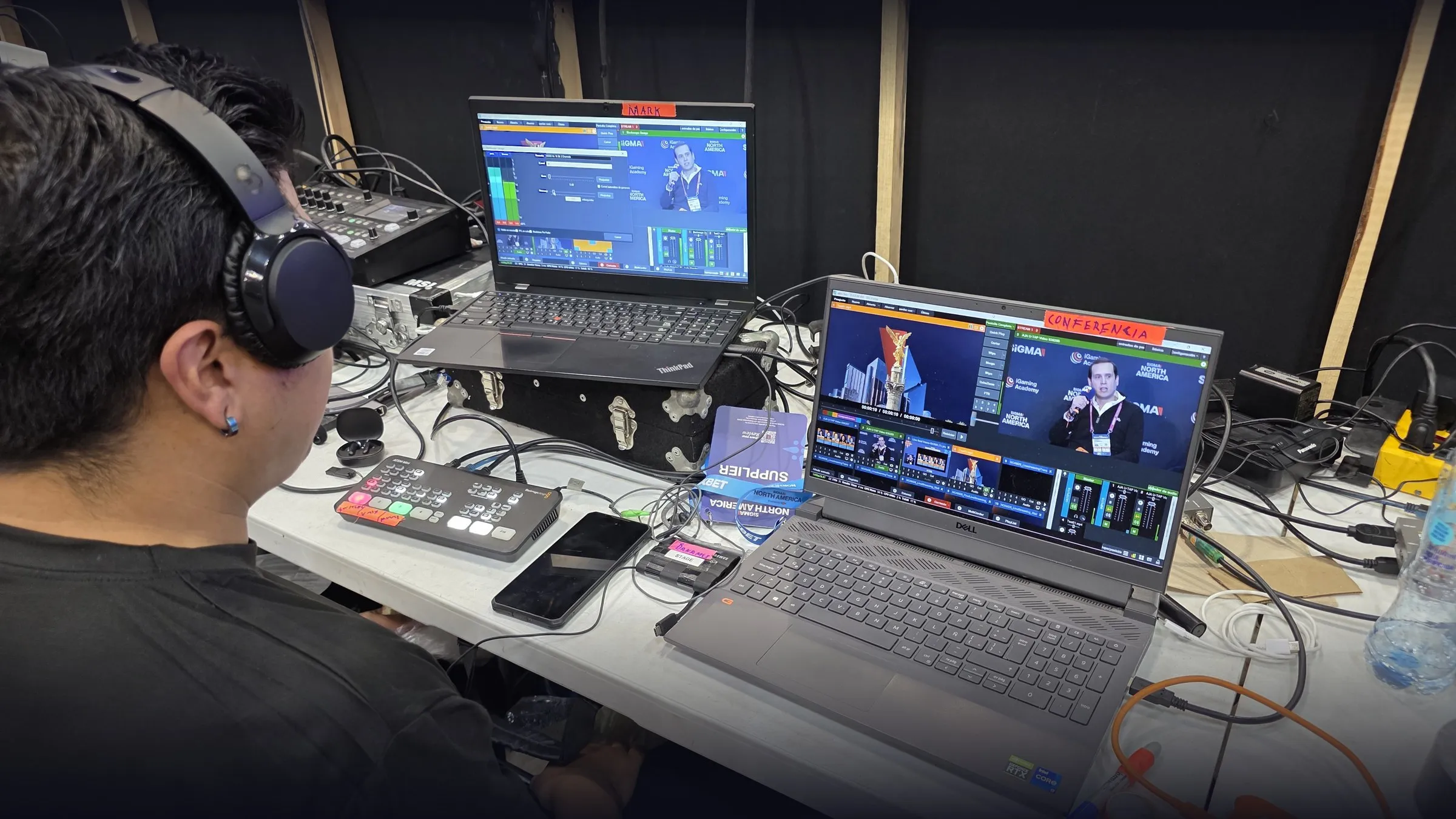
An ATEM switcher handled live switching, embedded audio and the client’s graphics package.
The directed program fed the reference screens in the hall and the streaming kit at the same time.
Two rehearsal days were part of the scope.
Only equipment verified in the project documentation, grouped by the job it did.
| Equipment | What it did |
|---|---|
| Panasonic AG-CX350 4K with operator | Main program camera |
| 3× PTZ cameras | Stage, wide and reverse angles |
| Panasonic AG-CX350 + Hollyland HDMI transmitter | Mobile interview camera for the second stream |
| Equipment | What it did |
|---|---|
| Blackmagic ATEM Television Studio Pro HD | Live switching and program mix, including the client’s graphics |
| Blackmagic HyperDeck Studio HD Plus + SDXC cards | Program recording, with camera ISOs as backup |
| vMix kit (laptop, audio interface, capture) | Stream encoding and delivery to the client’s platform |
| Equipment | What it did |
|---|---|
| 2× Bose L1 Pro16 with subwoofer | Program audio |
| Clear-Com PK-7, four beltpacks | Intercom between direction, cameras and stage |
| Equipment | What it did |
|---|---|
| Samsung AU7000 55", 2× LG 75UQ9050PSC 75" | Reference screens in the hall showing the directed program |
The production design absorbed the changes without rebuilding between the ceremony and the conference.
The technical and commercial proposal was reworked so the essential production stayed within the approved budget.
Outcomes as documented in the published case. We do not add figures the project did not record.
One production design can serve a ceremony, a conference and two streams if it is planned as one job.
Original source: First Impact case study (firstimpact.live)
General answers, with this case as a real example.
Yes. We provide operated cameras and remote-controlled PTZ cameras, with positions planned around what each shot is for: the room screens, the stream, the recording or all three.
Tell us which moments matter most, for example the CEO’s entrance, the award winners or audience questions, and we plan angles and camera roles around them. SiGMA North America 2026 used one operated 4K camera and three PTZ cameras on the main program.
Also asked as: Do you provide camera operators for events?
· Can you film our conference with several cameras?
Case study: SiGMA North America 2026 · Live Streaming & Broadcast Production
Yes. Recording is its own deliverable and does not require a stream. We can record the switched program, each camera separately, the presentations, or a combination.
Agree the file formats, audio channels, storage and delivery date in the proposal, and say whether the material will be edited later. For Expertise France, ISO and program recordings at three points in the chain produced a mastered program with no reshoots.
Also asked as: Can you just record our event?
· Do we need a livestream to get a video of the event?
Case study: Expertise France: Rendez-Vous de l’Expertise in Mexico City · Live Streaming & Broadcast Production
A recording backup protects the content; live failover protects the live audience’s viewing. They are different measures.
Recording the program locally (often on two recorders) means the content exists even if the stream drops, so it can be published afterwards. Live failover means the stream itself keeps running, for example through a second connection, a backup encoder or a secondary destination. A proposal should say which of these is included.
Also asked as: Does recording the event protect the live stream?
· What is stream redundancy?
Yes, within limits. If you share a budget range and your priorities, we can propose options, such as a smaller screen, fewer camera positions or a leaner crew, and explain what each choice changes on the day.
Safety, venue rules and the systems the program genuinely depends on are not negotiable. For SiGMA North America 2026 the proposal was reworked during planning to keep the essential production within the approved budget.
Also asked as: Can you work with a limited AV budget?
· What can we cut to reduce production costs?
Case study: SiGMA North America 2026 · What determines production pricing?
Scope changes are reviewed and confirmed in writing before they are carried out, together with any effect on cost, crew, schedule or availability.
Events change, and a proposal can be revised as the agenda, venue or content evolves. For SiGMA North America 2026, the technical and commercial proposal was reworked during planning so the essential production stayed within the approved budget.
Also asked as: What if our agenda changes after we approve the quote?
· How do you charge for last-minute changes?
Multicamera streams, town halls, webinars and executive broadcasts: directed, delivered to your platform and recorded.
Audio, LED and video, lighting, cameras and crew for conferences, corporate events and launches, coordinated with your venue and run to your show flow.
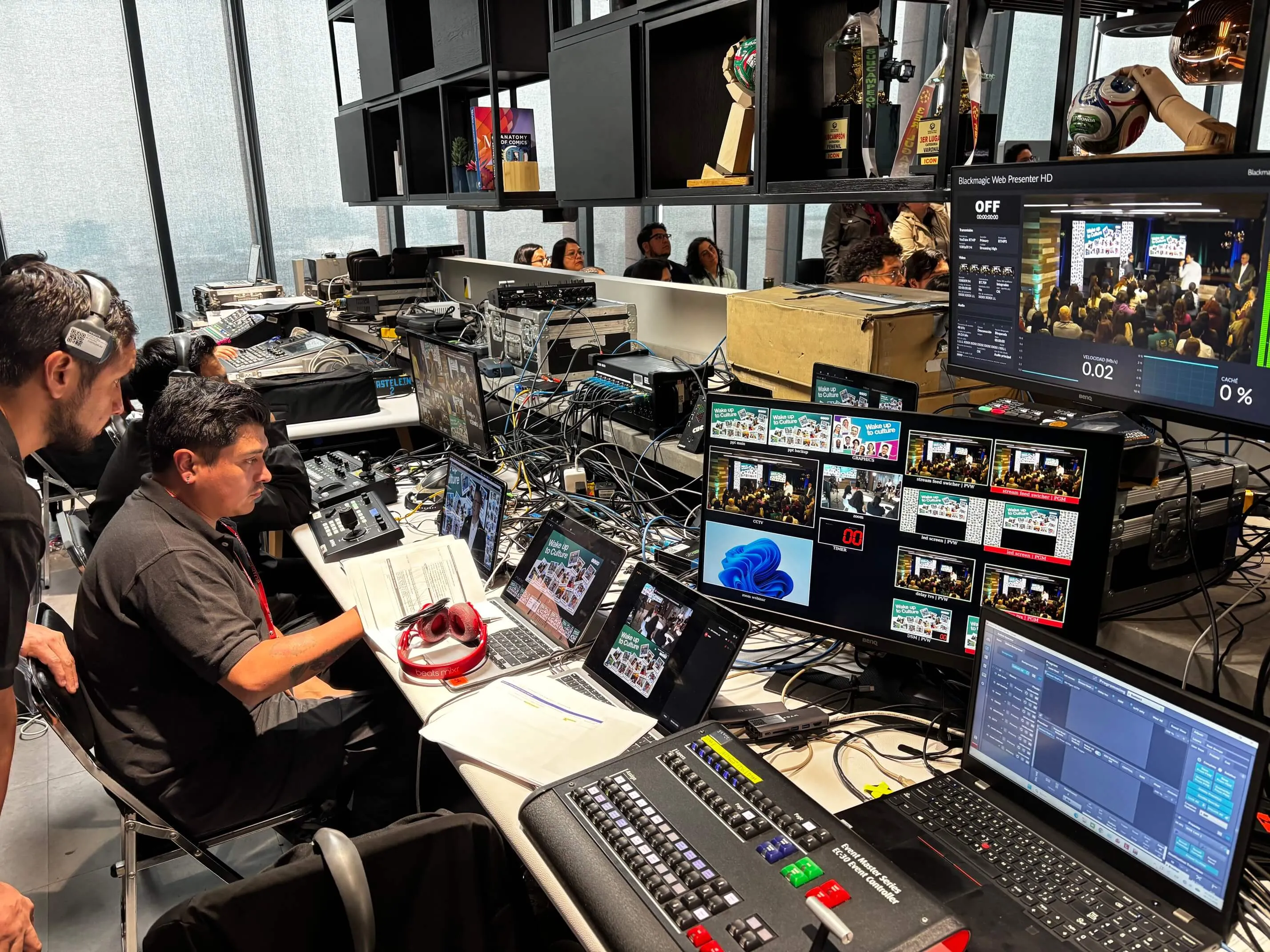
ICON · Mexico City
An international broadcast producer needed a local team to build and run the Mexico City hub of a global hybrid event around its own workflow.
DV4 directed the global broadcast. Castelein AV built and ran the Mexico City hub.
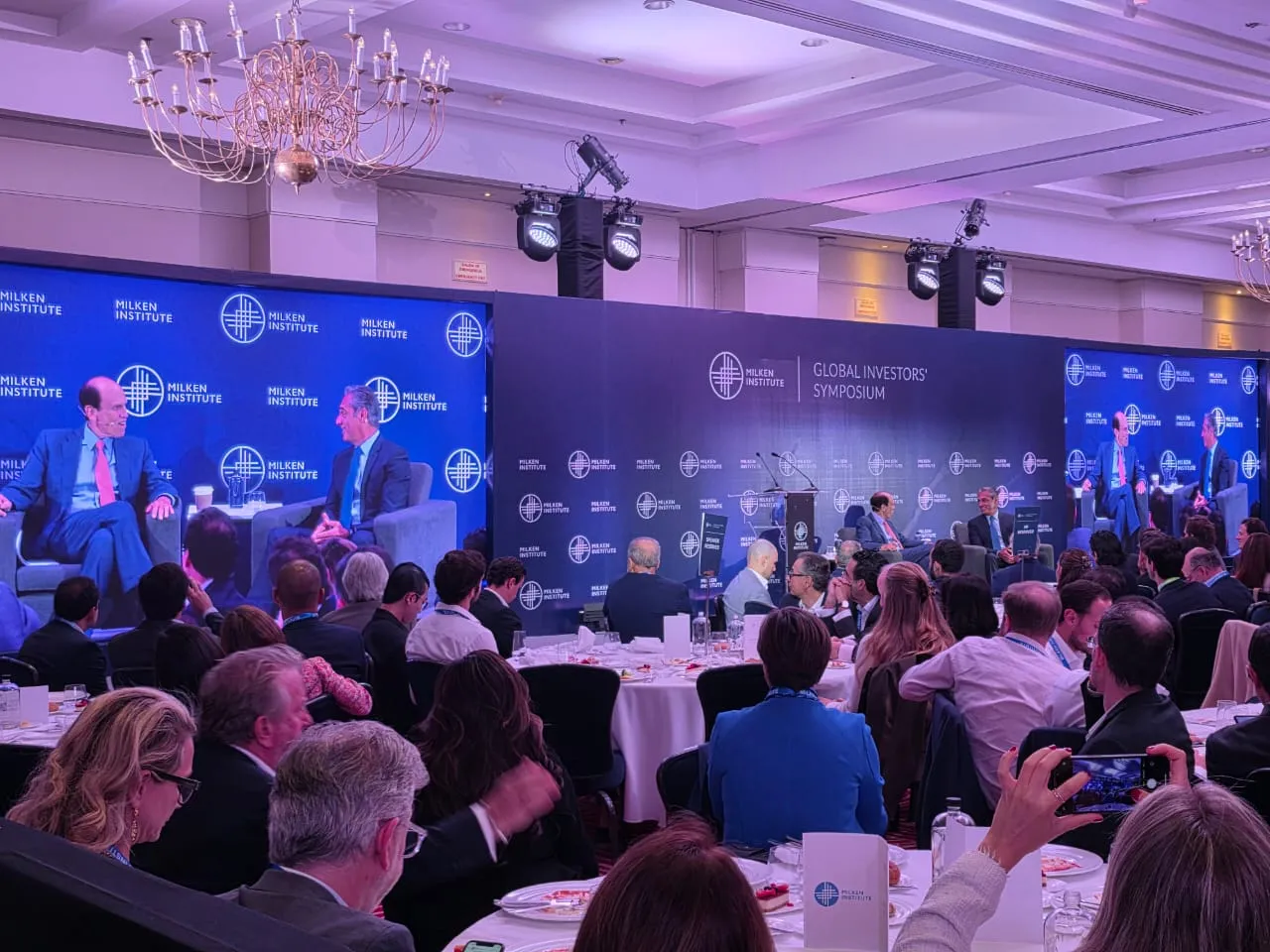
Milken Institute · Mexico City
Five event spaces at the Four Seasons Mexico City run as one technical production, briefed through a UK-based agency.
Briefed by a UK agency for Milken Institute. Technical production by Castelein AV.
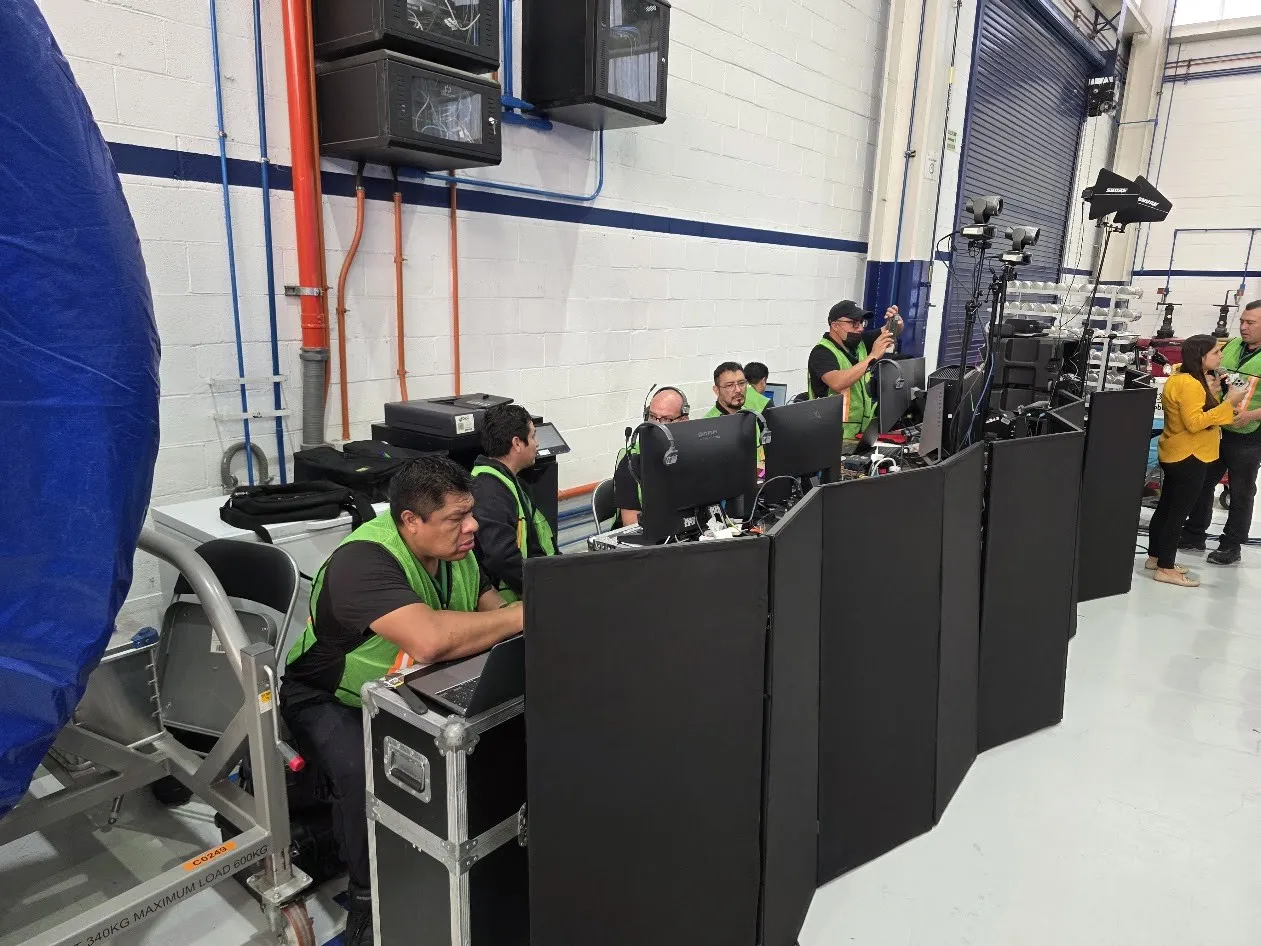
ITP Aero · Querétaro, Mexico
A hybrid All Hands on an aerospace plant floor: 125 people in the room and more than 1,500 colleagues on Teams in four countries.
Turnkey production by Castelein AV for ITP Aero.
Send us your brief
Share what you know so far: dates, city, venue, audience and what the production has to do. Unknowns are fine. We reply with questions or a scope-based proposal.