
ITP Aero · Querétaro, Mexico
ITP Aero All Hands 2026
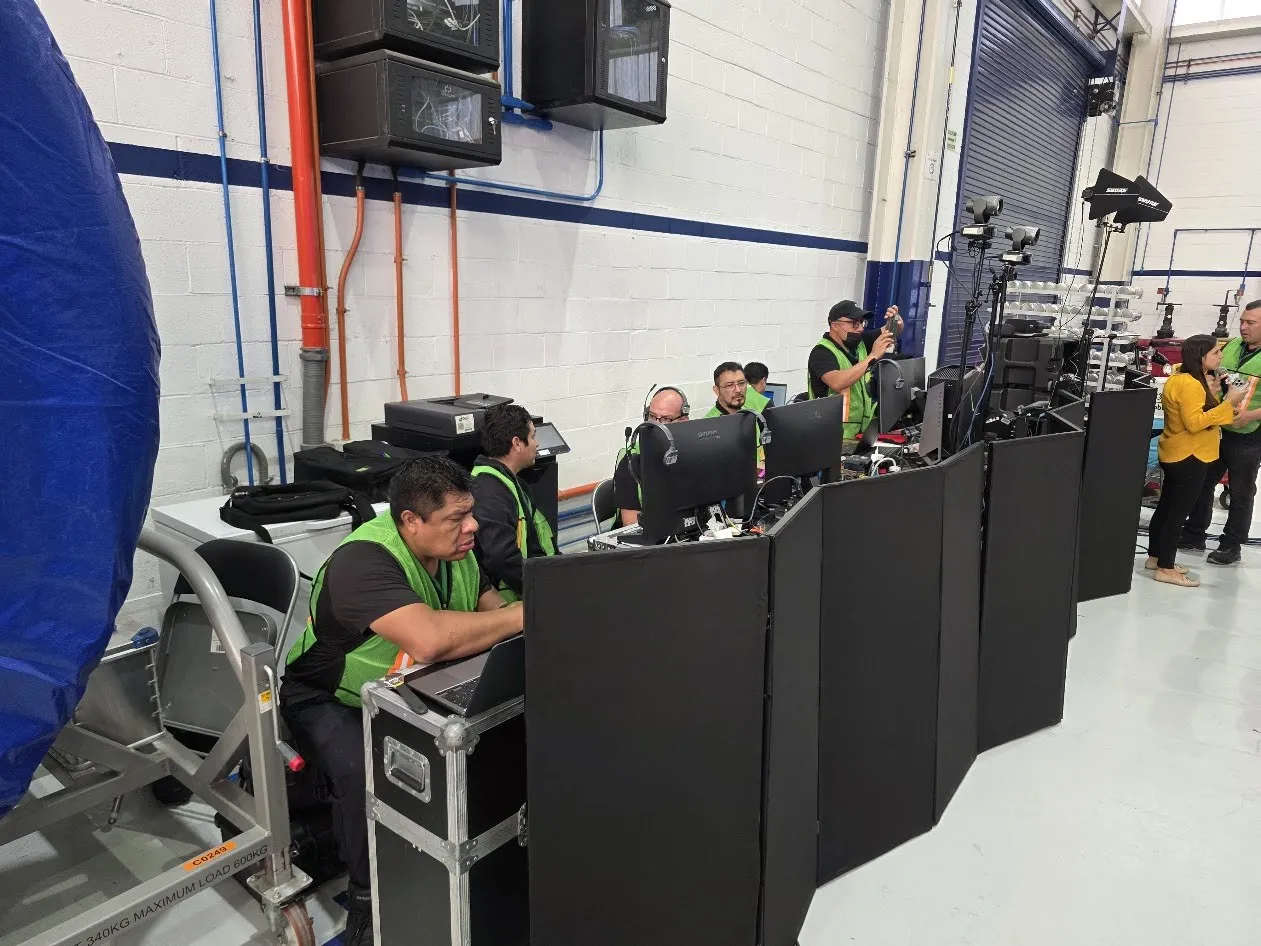
A hybrid All Hands on an aerospace plant floor: 125 people in the room and more than 1,500 colleagues on Teams in four countries.
Turnkey production by Castelein AV for ITP Aero.
Broadcast format
A town hall fails quietly: the plant hears an echo, the regional office sees a wide shot, and nobody's question gets through. We produce it so every site gets the same broadcast and the same voice.
A corporate town hall, or all-hands, is a directed live program that connects leadership with employees wherever they work: headquarters, plants, regional offices or home. The production brings the main stage, remote presenters and sites, live Q&A and presentation content into one broadcast, delivers it to the platform your people already use and records it for those who cannot attend.
Also known as: All-hands meeting production · Town hall livestream · Employee broadcast
A town hall is a two-way program. Depending on your organisation, the scope may include:
Cameras, audio and screens at the main location, directed for the people in the room and online.
Offices, plants or speakers joined into the program after a technical test, with return audio.
Questions from microphones in the room, other sites, the chat or a moderated tool, routed to the presenters.
Slides, video, names and titles played into the broadcast from your templates.
Simultaneous interpretation integrated into the broadcast where the program needs it.
Delivery to Microsoft Teams, Zoom, your intranet or another platform, within what it supports.
A program recording for employees on other shifts or in other time zones.
Two kinds of site
Each site in a town hall does one of two jobs, and each needs different equipment and testing:
They watch the broadcast on a screen with good sound. The work is a reliable connection and a room set up to see and hear.
They send video, audio or questions back into the program. They need cameras or microphones, a return feed and a rehearsal.
Tell us which sites watch and which take part. It shapes the scope more than the size of the audience does.
These depend on your platform, your sites or third parties, so we confirm them per project:
Who presents, which sites watch, which take part, and on which platform.
Connection, room and equipment checked per site, with one contact at each.
A written scope with inclusions, exclusions and the protections that apply.
Every contributing site connected before the day, and the Q&A hand-offs rehearsed.
Directed broadcast, monitored sites and local recording throughout.
The recording and any agreed edits, for people who missed it.
A town hall budget follows the number of sites that take part, not the number of viewers:
Share a budget range in your brief and we will propose a scope that fits it, with the trade-offs of each option.
ITP Aero · Querétaro, Mexico
A hybrid All Hands on an aerospace plant floor: 125 people in the room and more than 1,500 colleagues on Teams in four countries.
Turnkey production by Castelein AV for ITP Aero.
ICON · Mexico City
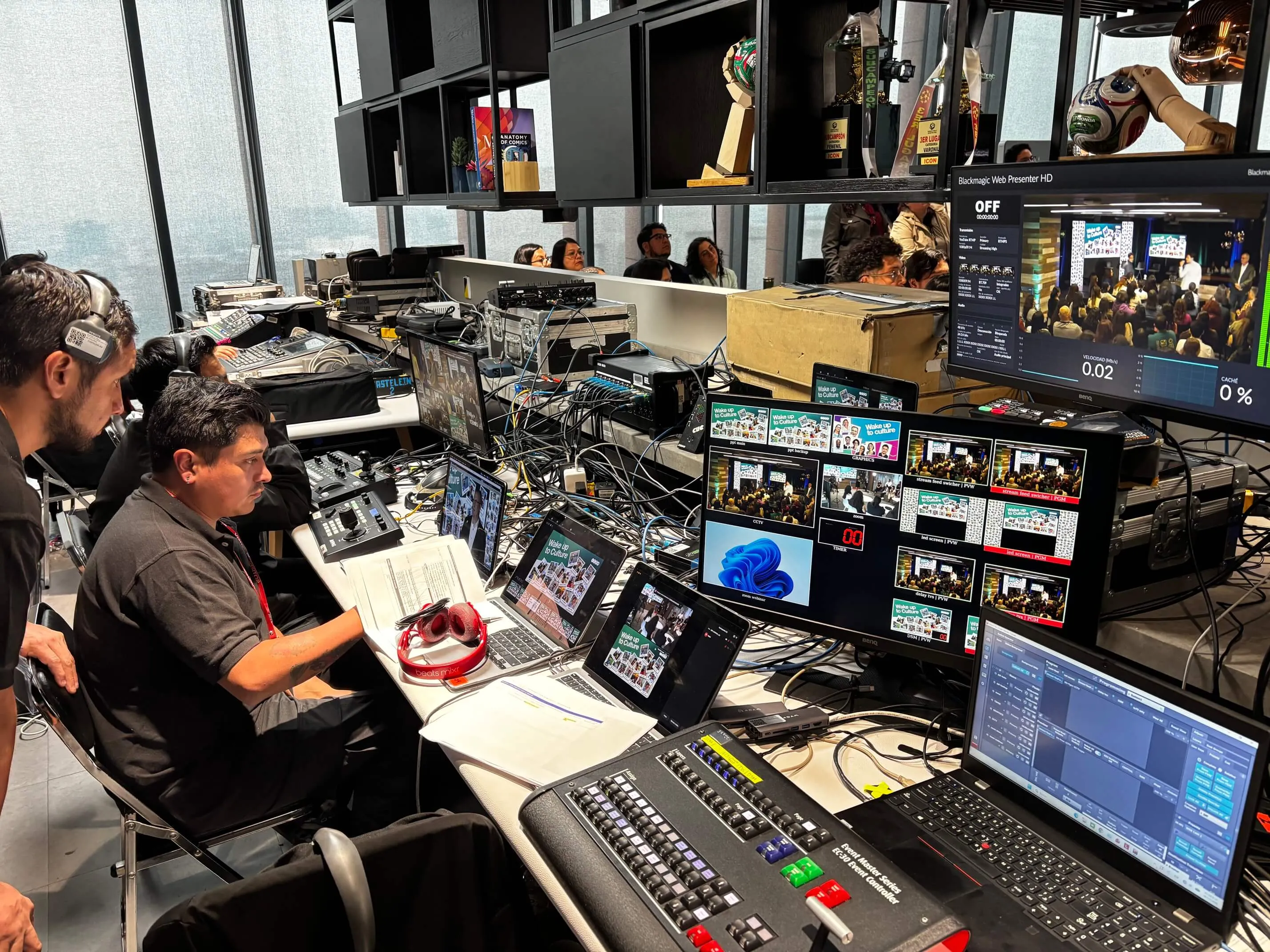
An international broadcast producer needed a local team to build and run the Mexico City hub of a global hybrid event around its own workflow.
DV4 directed the global broadcast. Castelein AV built and ran the Mexico City hub.
A directed live program that connects leadership with employees in one or several locations, with the same picture, the same sound and the same chance to take part wherever people watch.
It usually combines a main stage, remote sites or presenters, live Q&A and a recording for people who cannot attend.
Yes. Questions can come from microphones in the room, from other sites, from the platform chat or from a moderated questions tool.
We agree the format in advance, rehearse the hand-offs and make sure remote questions reach the presenters as clearly as questions in the room.
Yes. Monthly or quarterly town halls benefit from a fixed format: the same set-up, graphics package and run of show each time.
Agreeing the format once shortens preparation for every edition after it. Share the calendar and we plan around it.
Yes. We connect rooms, floors, offices or cities into one program, either by producing each location or by building the local hub inside a wider workflow.
Multi-site work depends on clear rules: which location sends what, who directs, how timing is handled and how teams talk to each other during the show.
Also asked as: Can you connect several offices in one live broadcast?
· Can two venues share one program?
Hybrid Events & Multi-Site Production · How to Plan a Multi-Location Corporate Broadcast
Yes, if interaction is designed in and the platform allows it. Remote people need to hear the room clearly and be heard without echo, which takes audience microphones, a clean audio return and someone moderating.
A one-way broadcast with typed questions is simpler than a panel where remote and in-room guests talk to each other. Tell us which format you want; it changes the audio routing, the screens and the rehearsal plan.
Also asked as: Can online attendees ask questions live?
· Can people in the room talk with remote panelists?
Hybrid Events & Multi-Site Production · Case study: ICON global hybrid event: the Mexico City hub
Yes. Zoom and Teams can bring remote speakers into the room, carry the program to remote employees, or both. We connect them as production sources rather than leaving a laptop pointed at the stage.
Meeting settings, host rights and audio routing need testing with the account owner, because two meetings on the same platform can behave differently. ITP Aero’s All Hands ran on Teams; ICON’s Mexico hub connected into DV4’s Zoom studio.
Also asked as: Can you put Teams participants on the big screen?
· Can a Zoom speaker present at our live event?
Case study: ITP Aero All Hands 2026 · Case study: ICON global hybrid event: the Mexico City hub
A livestream needs a stable, preferably dedicated, wired upload connection with headroom above the stream’s bitrate. Stability matters more than the headline speed in the venue’s brochure.
The right figure depends on the number of streams, their quality and any remote speakers sharing the line. We test the actual connection at the venue and, when the risk justifies it, plan a second connection.
Also asked as: How much bandwidth do we need to livestream an event?
· Is hotel Wi-Fi good enough for streaming?
How Much Internet Bandwidth Does Professional Livestreaming Need?
Offices, plants or countries connected into one directed program, with tested connections and one point of contact.
CEO updates, results and crisis messages: directed, rehearsed and delivered privately to your platform.
Multicamera streams, town halls, webinars and executive broadcasts: directed, delivered to your platform and recorded.
Share your event brief
Share what you know so far: dates, city, venue, audience and what the production has to do. Unknowns are fine. We reply with questions or a scope-based proposal.
First Impact